Category: Non-Subway Tunnels

  • Luv Tunnel 2: The Cows Come Home?

    Luv Tunnel 2: The Cows Come Home?

    Yesterday’s fuss about the west side ‘Cow Tunnel’ really got me wondering if perhaps the ‘Luv Tunnel’ was known by another name decades ago. Afterall, They are located not far from each other and urban legends, particularly concerning the NYC underground, are often wildly exaggerated. Stories about hidden abandoned subway stations still with pianos in them, CHUDs, etc are sadly pervasive.  Thus it’s not much of a stretch to assume that rumors of a possible tunnel built at 34th street could actually be an actual, existing tunnel at 41st.

    Before we go further, if you haven’t already, check out the original post on this topic over at Edible Geography. It’s a most interesting read…

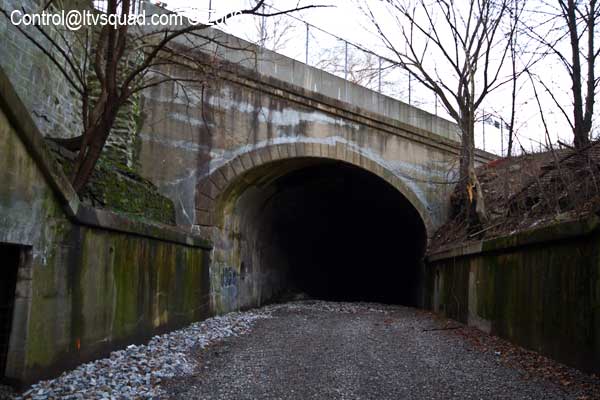
    The Luv tunnel has always been a bit of a mystery to me. It’s a short tunnel that dead ends at a solid concrete wall. According to some older graffiti artists/explorers, this tunnel once dead ended at the Hudson river. I never got around to doing homework on it until now (10 years after discovery of it)

    There are very few references to what function this tunnel previously held online. Approximately located below W41st street, ‘the luv tunnel’  served 2 functions:

    1) As a wye (used to turn railroad cars and engines around – sort of like making a 3 point Uturn, only on tracks), and
    2) To service stock yards previous located above these tracks.

    My only current reference for this second part is this obscure web page – with the relevant quote:  “At 41st Street there was a wye as well as a stub track to several slaughter houses”.

    This is however backed up by the location of a stock yard and slaughter houses on this old 1920s map.

    As you can see, there was a rail line (denoted by the solid line with the slashes through it) running up the south side of W41st street to service the stock yards (where one can assume cows were delivered for the slaughterhouses). When these tracks were later placed below grade, my theory is a basement level loading dock was built to connect to the tunnel. It’s not very far fetched when you consider how many businesses modified their buildings to receive rail service from the (then new) High Line.

    Underground tunnel + Slaughterhouses = “Cow Tunnel” ?

    If you have a better theory and more information, please step forward with it in the comments. I’ll gladly update this & give cred where it’s due.

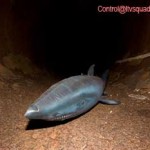
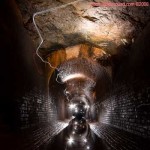
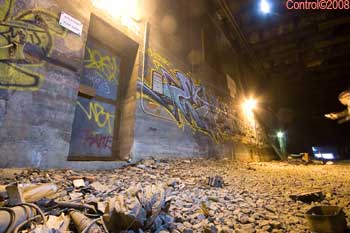
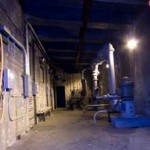
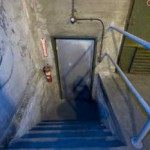
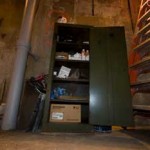
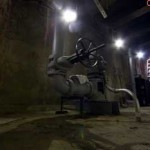
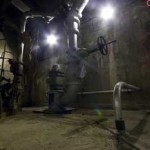
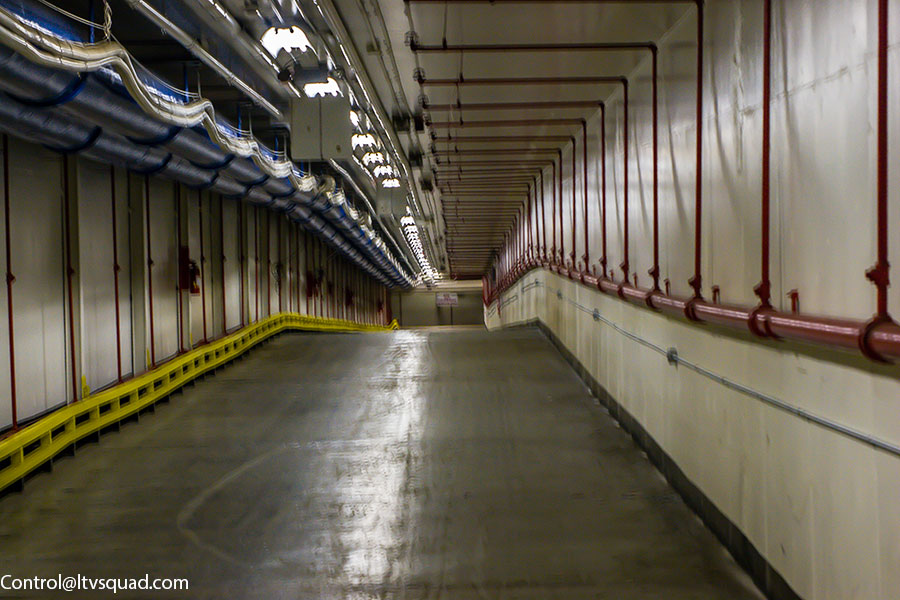
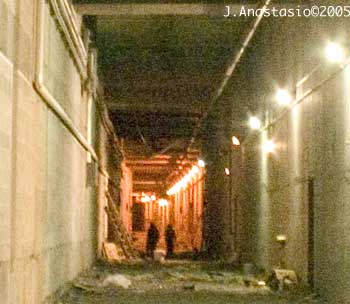
    Until then, enjoy these modern day photos of the Luv (maybe Cow) Tunnel.

    Junction of the ‘Wye’.

    One of 2 Wye tracks, facing south (and yes, it’s Utah’s world, we just visit it)

    End of the line facing 12th ave. Miru Kim & Ben Gibberd are the mysterious characters in the background – we were down there for his excellent NY Times story.

    (Hey since I’m so plug-happy today, how about that Utah plug one more time? Utah, Bitches!)

  • St. Mary’s Tunnel 2009 – it’s not a swamp, it’s a cesspool

    St. Mary’s Tunnel 2009 – it’s not a swamp, it’s a cesspool

    IMG_0999

    It was time for a long overdue return to this abandoned rail line to properly cover what has turned out to be the city’s failed clean up effort of the abandoned Port Morris tracks in the Bronx (aka ‘The Bronx Swamp’).

    While the media seems content to throw the city administrators a lot of fluff pieces for cleaning up part of the line, we found that the tunnel under St. Marys Park is still full of water, and north of there – this former railroad right of way is still loaded with syringes, junkies and homeless camps.

    The photos tell the story.
    IMG_1011
    1905 – when the tunnel was built.

    IMG_0978
    Former rail siding

    IMG_0959
    Homeless camp at the northern end of St. Mary’s tunnel

    IMG_0952
    Looking back into the tunnel – filled with garbage and shitwater.

    IMG_0935
    Human Debris

    IMG_0936
    Camp Bedbug.

    IMG_0942
    Needles everywhere down here.
    North end of the tunnel.

    IMG_0946

  • Port Morris Branch: The so-called Bronx Swamp.

    Port Morris Branch: The so-called Bronx Swamp.

    We’ve seen some reporting as of late on ‘The Bronx Swamp’.  I’m not honestly sure who began calling this abandoned freight rail line by this name  but it is a very inaccurate one that doesn’t tell of the location’s true rich history. This section of track is much better known as the Port Morris branch, and it is not, nor has it ever been, a swamp.

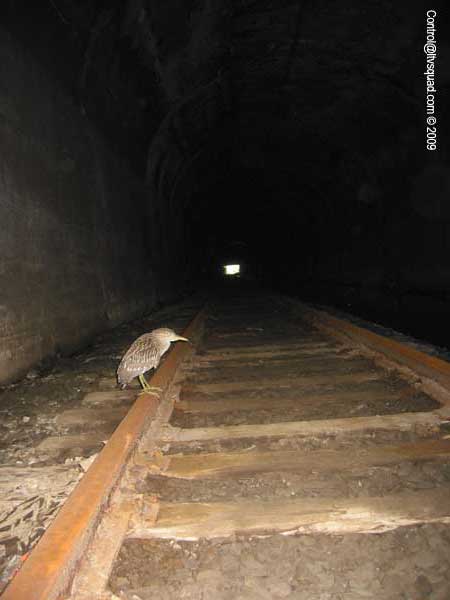
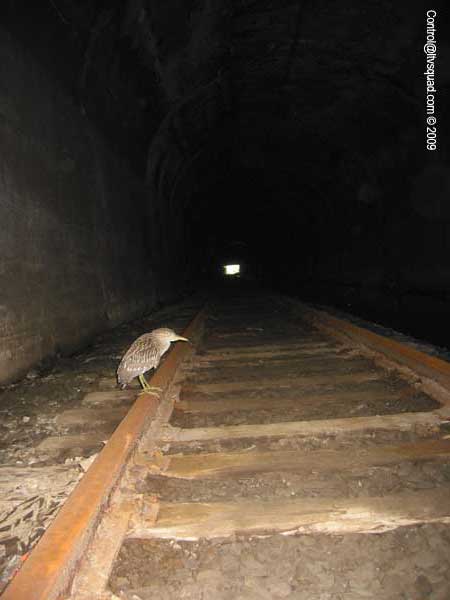
    While the newspapers, bloggers and authorities seem confused as to who owns property, I can tell you beyond a shadow of a doubt it was, at least up to 2003 owned by CSX transportation.  Somewhat unbelievably, it was an active railroad until 1998, and was only officially filed as abandoned with the STB in 2003 (published in the Federal Register V68 N52 March 18 2003). It has also been covered on this site many times over the last few years. A 2002 outing for example documented how the tunnel under St. Mary’s park was used as a home by at least one migratory bird (a yellow crowned heron – which makes it’s home in caves).

    2002:
    Railroads are a tricky and very old business. Many rail lines are not owned by the railroads outright. They are owned by adjacent property owners who cede the land to the railroad only for use as a railroad. If the railroad decides to stop operating over that section of track, the property rights go back to the original owners. In the case of the Port Morris Branch, the tracks were build here in the 1840s. Since CSX filed for abandonment, it’s anyone’s guess who the owner is today. The NYC’ government’s attempt to get paid for the clean up work will likely at the least take years of litigation before coming to a resolution.

    It should be noted here that the Port Morris would never have been abandoned if it wasn’t for two separate factors: The first being that the branch, with it’s tight curves and low tunnel under St. Mary’s park, was an obstacle for freight in NYC. The tight curves meant that longer freight cars could not be moved down the line, and the height of the tunnel restricted the taller intermodal cars from using these tracks. These higher and longer cars are a cash cow for railroads. The state was convinced (and rightfully so) that not being able to move these cars by rail  was adding trucks to the roads of NYC. Their solution was to build a 1.9 mile railroad branch known as ‘The Oak Point Link‘. This segment of track is build on a pontoon bridge along the shore of the South Bronx, over the Harlem river.  The link was also designed to eliminate the need for freight trains to run through Mott Haven Junction – a major junction where all commuter trains into Grand Central converge. For a freight train to get through the junction and onto the Port Morris branch, it had to cross all tracks, essentially blocking the entire junction – a recipe for an epic fail.

    On September 18, 1988, just such a disaster took place. The daily Selkirk->Oak Point freight left Selkirk with a few cars that were too tall to fit under the bridges along the tracks in the Bronx. When this train arrived in the Bronx is smashed into the River Ave overpass near Yankee Stadium. The derailed cars blocked all of the Metro North’s Hudson line tracks. The head end of the train was well into Mott Haven Junction and about to enter the Port Morris branch. This effectively prevented any trains from accessing Grand Central – and all of this just in time for rush hour. Thousands of commuters were completely screwed.

    After the accident Conrail (later CSX) began using the Oak Point Link that runs around the southern end of the Bronx – thus avoiding using the complex set of switches at Mott Haven Junction. This obliterated the need to operate the short Port Morris branch – which no longer had any local customers and the function of which was now significantly better served by the Oak Point Link.

    The Port Morris branch was a hated necessity for the railroads up until ‘the link’ opened. Rotting crossties, decades of trash, deranged homeless druggies on the tracks – all were horrible conditions to run a railway in.  Clean up efforts were apparently futile as neighbors and illegal dumpers used the tracks as their own toilet. This trash didn’t just magically appear here one day – it was ‘air mailed’ down onto the tracks by kids and neighbors who just plain did not care.  Conditions were so bad that the railroad had to mandate that all of their engines running through the Bronx be equipped with snow plows year round due to the debris often thrown onto the tracks here. CSX was all too happy to shut the line down, rip out the rails, and disavow themselves of ownership completely.

    2008:

    There were various reports during the last decade that the Port Morris would be sold to the MTA for potential reuse as a transit line connecting Co-Op city to Grand Central. My quick search can find no record of such a sale though. Funding for this project has never materialized, and the Melrose Metro North station has been expanded northward to block the connection to the old Port Morris branch to boot.

    There is no doubt that between acquiring half of Conrail and the line’s abandonment in 2003, that CSX was the owner of this property.  It was most likely the railroad that removed the rails (which can usually be reused or at least have a good scrap value) sometime between 2001 and 2003.

    Some are saying these tracks should also be opened as a park – calling it ‘the low line’ and suggesting that you can’t be charged with trespassing because no one owns it. The latter is false information. You can visit this line assuming no one has put up ‘no trespassing’ signs. Beyond that you’re taking a minor legal risk. Your chances of getting caught are about as low as Tiger Wood’s moral right about now, but if you are spotted by a cop you can and most likely will get a DAT (Desk Appearance Ticket – aka a date with the judge who can give you up to 15 days in jail). No police officer is going to listen to your argument that no one owns the property. Save that for the judge, or just take the fine or ACD that’ll be offered instead. That is, unless you want to piss off the judge and spend 15 days on Rikers.

    It would make an interesting park, though perhaps it’s best to just leave it as it is. We’ve seen the fiasco that the administration of the High Line has become and we are not pleased. Maybe if it’s just owned by the city and doesn’t involve any strange non-profits with their own agenda it make for an interesting park free of egos.

    I will be visiting this location soon for more up to date photos, but if you happen to get up there before me, feel free to email me some shots & I’ll link or post them here.

    (Thanks to Shane for helping me dig up some info on rail line abandonment)

  • The Aquaslide

    The Aquaslide

    It’s always nice to be able to revisit an old favorite. Thanks to all those that made this trip and the drinking afterwards… oh and your mom, because I totally touched her MilfBags later on that night…

  • PUMP

    PUMP

    The keys to the kingdom open odd underground doors such as those to rooms like this one: a Pump Room located under Manhattan. This room contains water pumping equipment which is used in case of underground flooding in a nearby tunnel. The water gets sucked out of gratings and pumped into the cities sewer system.

  • The Farley – Morgan Postal Tunnel

    The Farley – Morgan Postal Tunnel

    1280px-James_Farley_Post_Office_c1912
    NYC has a labyrinth under its streets like none other. Subway tunnels, steam tunnels, railroad tunnels, steam tunnels, auto tunnels, drains, water tunnels 600 feet below the ground, rivers and creeks covered so long ago most people don’t even know they are there… You could say, NYC is a tunnel-centric city…
    (more…)
  • Abandoned Park Ave Trolley Station

    Speed upon entering tunnel: 65mph
    Duration: 5 minutes
    Number of photos taken: 38
    Video Footage: 42 seconds

    This was quite frankly the coolest short duration exploration I’ve made in a long time. It was a surgical strike of urban guerrilla historianism pulled off with the lightening speed and energy that one would come to expect of any of NYC’s more capable explorers.

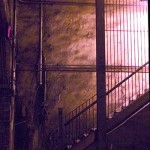
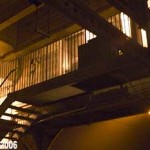
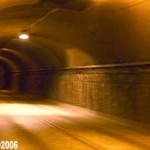
    The target of this operation was the abandoned 38th street trolley station located in the no name auto tunnel south of Grand Central Station under Park Avenue. Originally constructed as an extension of railroad service south of grand central in the 1850s, the tracks and tunnel eventually came to be used for trolley service which used the station between in 1870 and 1935. The original trolley cars were pulled by horses, with electrical trolleys later added at the turn of the century. In 1935, the tunnel was closed for two years and converted for automobile use. The station stairs to the surface were retained as an emergency exit for this auto tunnel.

    Today, the station/stairs lays dormant and isolated. There is no pedestrian access to this location (except via the locked hatch on the street surface), thus making this mission mildly difficult to pull off. Just like sex with your mom though, timing really is everything, and dedication to the trade will always get the job done.

    Ntwrkguy was behind the wheel (the brand new just off the showroom floor wheels, I should add) for this mission, playing the key role in it’s success. Without wheels and a capable savvy driver, there is no way to pull off this mission. I suppose you could run into the tunnel on foot, but traffic moves very fast here, and there is little space to be out of harms way. As one of few stretches of road through midtown that is devoid of red lights and pedestrians, the tunnel and associated road viaduct that wraps around the Grand Central Terminal building are something of a speedway for motorists. Traffic here is a constant, even at the midnight hour. With good timing and maneuvering though we manage to enter the tunnel without any cars behind us. I hop out and he takes off, with the plan to be picked up in 5 minutes – just enough time to document the spot and to escape should there be any motion sensor or security system (none of which was found here).

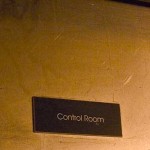
    I ran up the stairs to scope out the entire location. Unfortunately, the catwalk above the roadway is the only accessible ‘hidden’ section to this station. Directly in the middle of this catwalk is a short few steps leading to the hatch which opens into the median of park avenue. Appropriately, next to this exit is a small locked room labeled ‘control room’.

    The door was stainless steel, and the lighting around this area appeared modern and recently improved – however, the thick coating of dirt on the stairs told another story. Each step left a footprint in this half in thick soot, which also coated the walls. With no other footprints present, it was like walking on the moon for the first time. Clearly, the last time someone was at this spot on foot was quite some time ago.

    To sum up this trip in one word, I would have to say ‘exciting’. The constant rush of cars created an energized sensation, and the shortness in duration made little room for error. Just as I began to videotape I could hear the car horn echoing through the tunnel, signaling that it was time to leave, and with a cab coming up fast from behind, there was no time for long goodbyes, just the laughter of having pulled this off in such a constrained time frame under pressing conditions.

  • The Drumpf Tunnel

    The Drumpf Tunnel


    Amtrak’s trains running along the former yard in the early 1990’s. Today this area is covered by high rise buildings.

    A long time ago, a pussy-grabbing con man and his investor friends bought the former N.Y. Central RR rail yards which once lay just south of the freedom tunnel. The tracks here were abandoned in the 1980s when Conrail stopped servicing the area for some shortsighted reason. All yard tracks were pulled and the land became an open field of tall weeds and, along the water, shattered remains of piers and float bridges.

    As we all know, Amtrak revived this line for service into Penn Station from the north, and in the later 1990s, the real estate people bought air rights from Amtrak to connect their property to the streets of the upper west side. In doing so, they were able to build the foundations for their buildings above the tracks.

    Today, Amtrak still runs through this new tunnel. A single trackway/space runs next to this tunnel devoid of life. A large space was created and rumored to have been a planned station for this transit route which never came to be.


    Scenes from the new tunnel

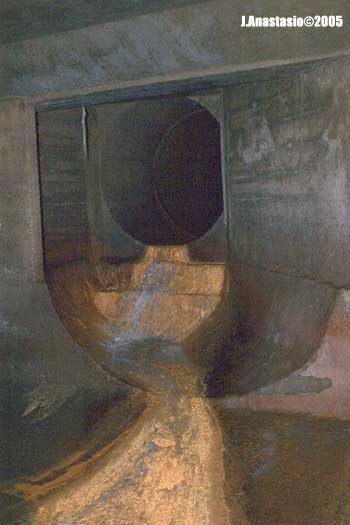
  • The Gold Drain

    The Gold Drain

    the first time I ever entered this drain, it was a cold rainy day. The water level was far too high to navigate this tunnel without ending up with some very cold very wet feet. So we came back one night when it was a little dryer, and found that despite the absolute blackness of this tunnel (no lights anywhere, no lights coming in from the manholes above), the tunnel was not without color. The bottom of the tunnel floor was thick with a golden brown sediment, perhaps some type of soil that had run off into this drain from some of the pipes and smaller drains that feed into this very large (and very smelly) drain.