Category: NYC ruins

NYC specific explorations

  • Greenpoint Terminal Warehouse – Easy like a sunday morning.

    Greenpoint Terminal Warehouse – Easy like a sunday morning.

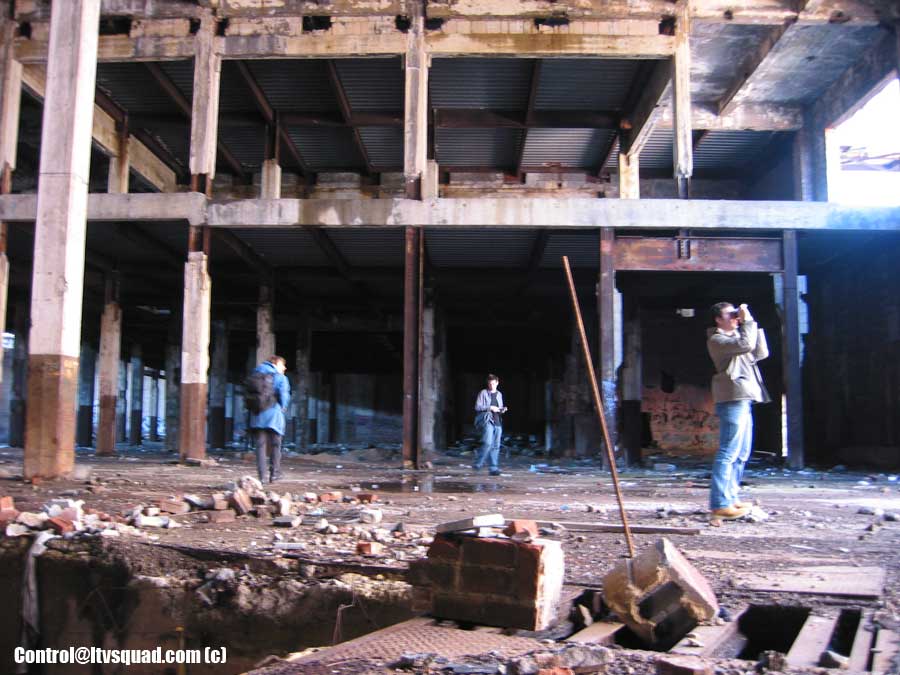
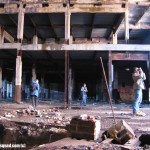
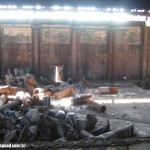
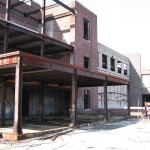
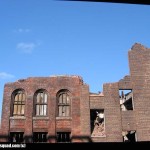
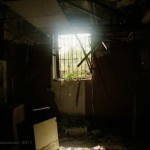
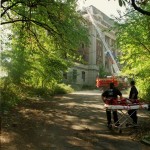
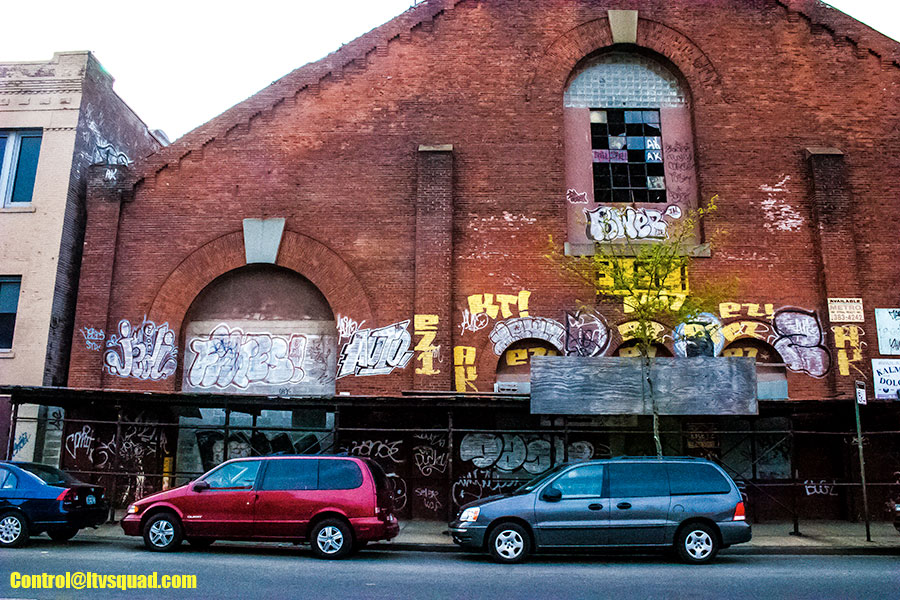
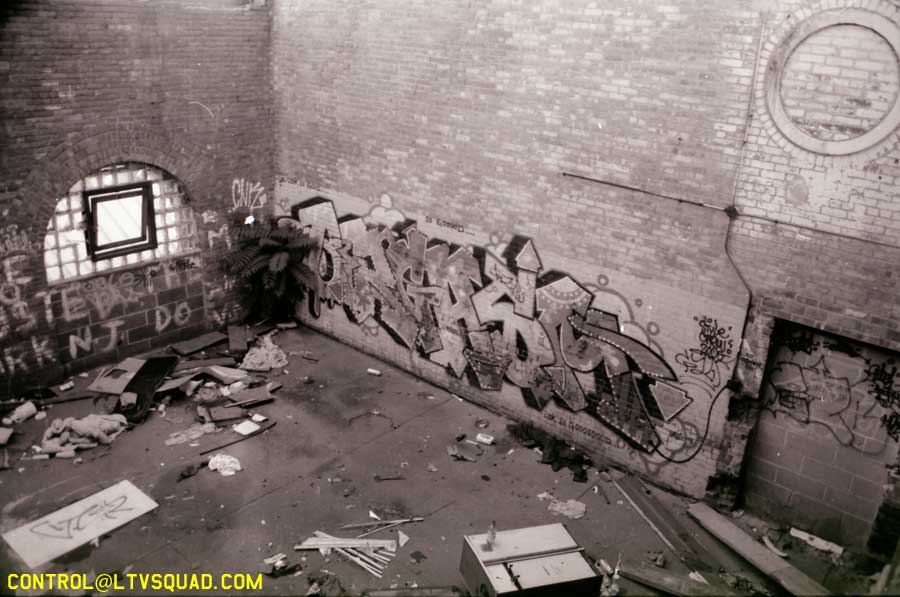
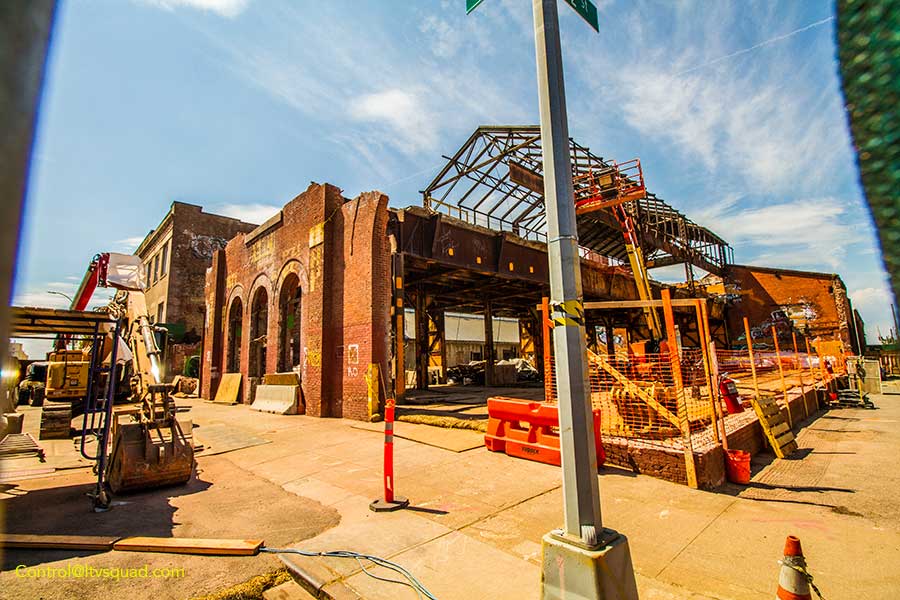
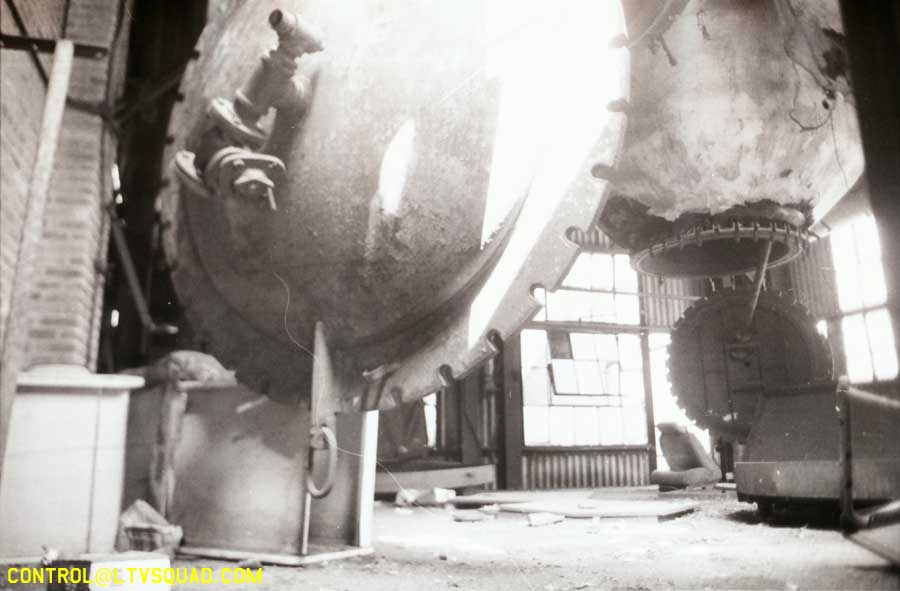
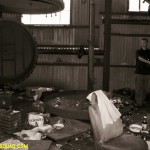
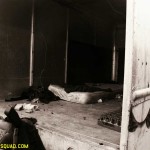
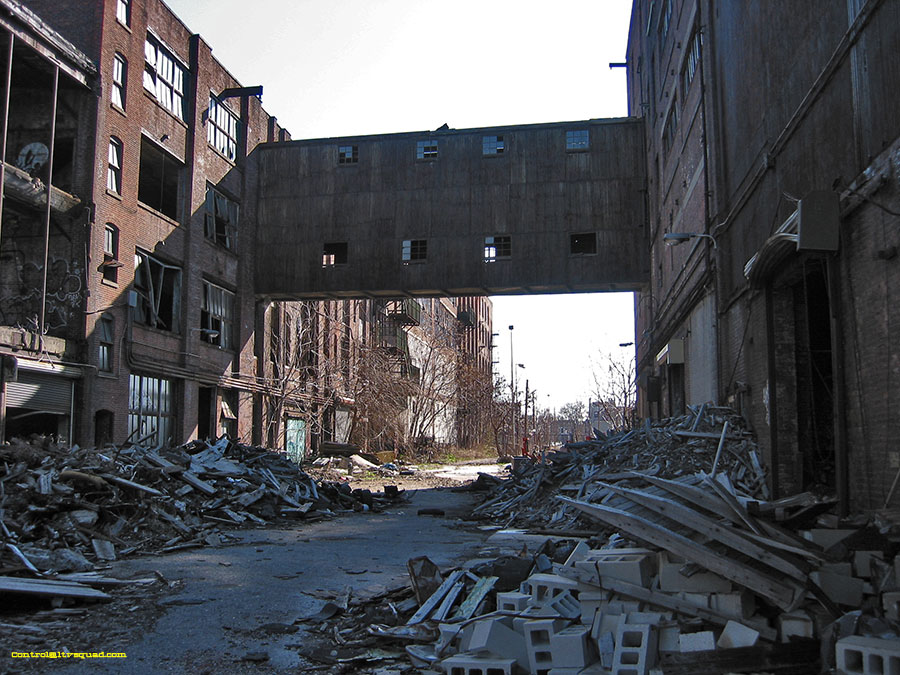
    After we found out that CF Freight had filed for bankruptcy and shut down their warehouse just south of GTW, w took advantage of the newly desolated surroundings to gain access for this, the first ever recorded daylight raid on the terminal.

    It was a bright and sunny sunday morning in spring, and it was like taking candy from a baby.

    IMG_9201

    IMG_9205

    IMG_9206

    IMG_9207

    IMG_9214

    IMG_9217

    IMG_9222

    IMG_9228

    IMG_9229

    IMG_9235

    IMG_9236

    IMG_9237

    IMG_9242

    IMG_9246

    IMG_9248

    IMG_9268e

  • Washburn Wire Factory, Harlem NY

    Washburn Wire Factory, Harlem NY


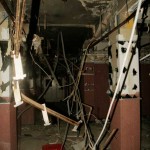
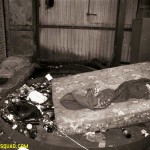
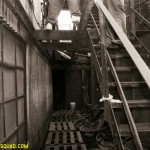
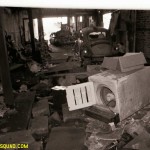
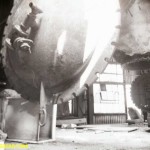
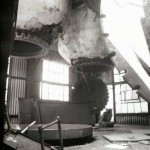
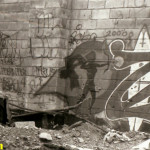
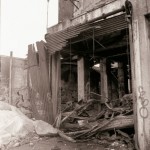
    The Washburn wire factory in Harlem was the very likely the largest factory in Manhattan. After production shut down, the factory became a haven for drug addicts and the homeless – a vast ‘mad max’ wasteland where not even the police would enter.
    (more…)

  • Carson Peck Memorial Hospital. Flaming Exploration

    Carson Peck Memorial Hospital. Flaming Exploration


    Intro:
    October 2001. Another beautiful autumn day, suddenly turned to chaos. The sun once again unnaturally blotted from the sky, with the smell of smoke accompanying the darkness surely enough to raise a growing fear in even those who hadn’t witnessed the events in Lower Manhattan just over a month ago with their own eyes. That fear grows exponentially and instantaneously as the sirens that were just seconds ago an ignorable part of the fabric of city life become incredibly loud and extremely close. “Is this really happening again?” you ask yourself half expecting to wake up. Nope, there’s no sleepy pillows and cozy bed here. The seemingly improbably has just become a heavy dose of the real, and you’ve just unwittingly cheated the dark hooded reaper one more time.

    But before we get to all that, Selector – rewind that track and bring us all the way back.

    History:
    The Carson Peck Hospital was built in 1918 and opened in 1919. Founded by his widow, Mr Peck was an executive with the Woolworth chain of ‘five and dime’ stores (a forerunner to today’s modern drug store chains). Carson was also the owner of The Brooklyn Daily Times newspaper, and President of the Wiscasset, Waterville & Farmington Railroad located in Maine (amazingly, part of this railway is in use again as a museum – the website has some info on how this came about) Born in upstate New York, he died at the age of 57, in 1915, having fallen ill to the then untreatable Diabetus. There’s a lot out there about Carson Peck’s life. This interesting account compares him significantly more favorably than the apparently stingy Mr. Woolworth.

    Enough about Mr. Peck – you’ve got the name and the leads, google away. You’re here for the building, and sadly there’s not a whole lot on the internet about the decades that this facility was open. A delivery man who used to bring oxygen to the hospital provides this insight:

    I worked in Brooklyn in the late seventies delivering oxygen for the Holmes medical company and Carson Peck Hospital was on my route. The place was scary and looked like something from a slasher movie series back then. The lobby had wonderful stained glass and marble everywhere. We accessed the building from the loading dock and rolled the 200 lb. oxygen tanks into an old fashioned freight elevator with a gate you closed and a power handle to make the thing ascend. The wards were filled with REALLY REALLY old people back then all dressed in white (it was a nursing home then). The nurses still wore starched white uniforms and it really seemed like a forgotten planet in the middle of Brooklyn. I will tell you the grounds were beautiful with real oak and elm trees on the property. The Hospital building was in the middle of the property on a small hill, all brick and granite.

    The hospital was shut down in the late 1990s and complaints soon came in to government officials with regard to the building having been left abandoned and accessible. Numerous complaints and attempts to contact the owners over the years seemed to be a failure. The building quickly fell prey to kids with rocks, scrappers and vandals. It was finally put out of its new found misery when it was demolished in 2003. Today, much of the property is now a new apartment building, filled with tiny apartments and jam packed with Hasidic jews.

    Adventure: That Day, Round Two.
    September 11th 2011 started as a routine work day in my life, and ended as a defining moment spent in the middle of a war zone. By the time October 16th rolled around, life was returning to some form of normal. It started as any weekend day might, and it too turned into something else entirely.

    For much of the summer myself and ‘M’ had been exploring nearly non stop, occasionally on our own but usually within the core team of 4 at the time. Of our former soviet bloc friends, Vlad and Marcin, only Vlad was slated to maybe join us today. Marcin had something else going on. We had been planning on checking out an abandoned hospital in Brooklyn since just before that fateful September day, and this day, just over a month later, would finally see us embark on the mission.

    Located in Crown Heights, the former Carson Peck Hospital was an unknown car wreck. All we knew is that it existed and may very well be a succulent flavour of hospital abandonment. Like nearly every other relic of NYC’s history we had been to at the time, no one we knew of had known of its existence – much less explored it. “UE” wasn’t a widely defined hobby on the increasingly popular internet just yet, and the only other ‘explorers’ in town didn’t actually live up to the title. It was up to us unlock this building’s secrets – just the way we liked it.

    Myself and M. Met up at a nearby subway stop and waited around for awhile Vlad had yet to arrive.. After waiting about 40 minutes, we decided he was going to be a no show and carried on our way. Cell phones weren’t common at the time, so it was either be punctual or catch up later. If it was a good exploring spot we’d probably be going back again anyway.

    In the short walk from the subway to the street the hospital was located on, we seemed completely out of place. Here lay a deeply socially divided neighborhood. The residents of the time (and even today today) were either Hasidic jews or blacks, and just 10 years prior were rioting against each other. It was 3 days before the NYPD brought things under control.

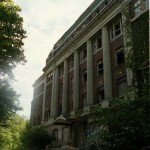
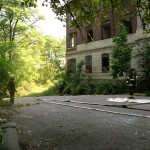
    The hospital stood on top of a small hill – above the street and hidden behind trees. The elegant arched driveway leading to the front door immediately told of the building’s former glory, while the trash piles and weeds signaled a lawless area. We approached the side entrance, and were slightly surprised to find no existing access here. Circling around back seemed like a maze of trash and debris, so instead we went back around front to scout it out some more before locating a suitable climb up and in spot (second floor windows were open).

    Our scouting didn’t last long. Just to the left of the main entrance stood a bold basement level point of access. With the sun beaming down and general quietness in the air, there seemed to be no reason not to step right in – through the blown out window, onto the table and cinderblocks which formed a very easy set of steps into the basement room. This elaborate access suggested people had been coming in and out of this building for some time – a suspicion that was soon confirmed when a gentile older man appeared out of the pitch blackness of the basement to say hello and immediately make his way outside. His reaction to us was that of one accustomed to meeting strangers here.

    As we looked around the basement I grew only slightly unsettled. Was that man living down here somewhere? How many others could be living in this building? With our crew not exactly rolling deep today, and us being very unarmed and carrying cameras that to a drug addict would appear as crack rocks the size of beach balls, there was good reason to pause. Is this a good idea?

    The growing suspicions soon became more and more real. A steady stream of people begin to emerge from the dark. Some are surprised to see white people, and seem to assume immediately that we’re police. We play that to our advantage somewhat, while giving each other the knowing look that maybe we need to come back here with reinforcements. The decision to pull out and re-evaluation this situation didn’t even need to be spoken after a slightly hostile sounding woman departing with a group of men warned us to be careful of her dog towards the top floor.

    We regroup outside, not content to depart just yet. It’s a beautiful day, perfect for getting interior and exterior photos of this building. It’s still mostly quiet out, except maybe those sirens in the far distance. This is a big building, and no one outside of the one lady seemed particularly offended by our presence. The kindly old grandfatherly man who we originally encountered has reappeared outside. He approaches us and soon we’re talking about the building. Indeed, he and many others are living inside. He starts pointing out the corner stone, engraved with the date the building was constructed, along with survey markings on the driveway, left by a demolition crew recently as they prepared a plan to presumably take this building down. He starts telling us a bit about himself, and it’s plain to see this 60 something older man had nothing better to do but to give us a both a tour of the building and serve as a shield against the residents assuming we were there for any reasons that might negatively impact their rent-free den of disorder.

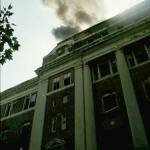
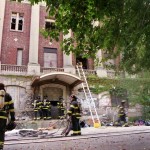
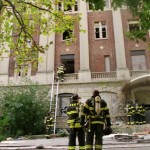
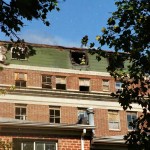
    Just then though, breaking the relatively quiet setting the shouts from inside. “Get Out! Get Out!” As we look upward to locate where the shouts were coming from (seemed to be the second or third floor), it dawns on me that it’s a little darker out than it was mere moments ago. Looking further and further up, the source of the hurried warning yells becomes immediately apparent, and the moment had finally arrived: The fucking building is on fire.

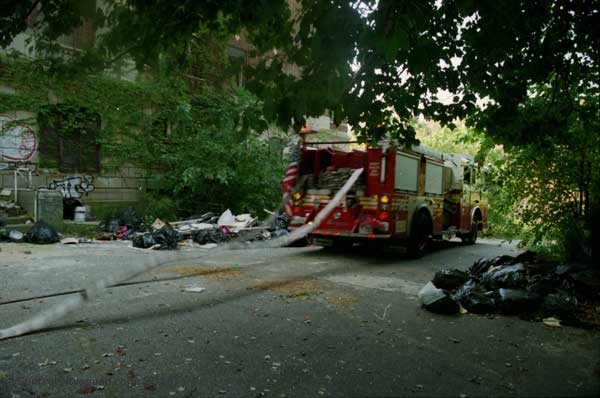
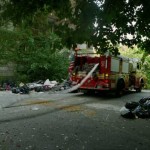
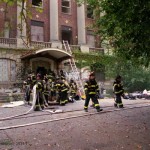
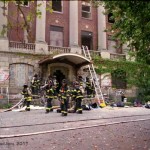
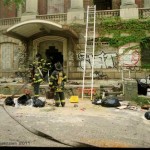
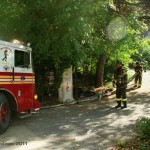
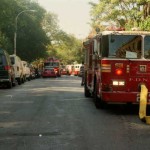
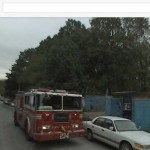
    We step backwards into each other, both looking upward in momentary amazement. Our new grandfatherly friend? He looks down at his can of King Cobra and offers ‘I should get rid of this’ – dropping it and disappearing into the brush. Those sirens in the distance? Suddenly they’re very, very loud. At one end of the driveway is an alarmed, growing group of Hasidic Jews. At the other is the first due FDNY truck, E234. Before we know it they’ve left the street and have driven directly up the driveway. We step back a bit further as they stop directly in front of us.

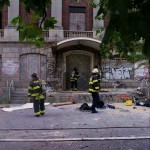
    Squatters are pouring from the basement. E234 unloads its crew and speeds off towards the other end of the driveway, dropping 2 hose lines from the rear as it proceeds. One of the firemen asks if there are still people in there. We believe so. Oh and maybe dogs too. Be careful – as if that even needs to be mentioned.

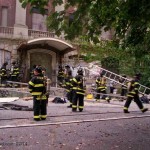
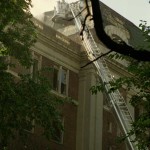
    Whatever sense of time I had ended – though a fair assessment would be that within less than a minute, a large contingent of firemen amassed where we were standing. The street was full of trucks from the first alarm response, with the sounds of still more sirens filling the distant air – second alarm already transmitted. The group in front of us has brought 2 ladders, being placed against the walls to access one of those second floor windows we were spying as potential access points. Below, the one man bashing open the ciderblock walled main entrance proves the well known point that a Halygon is a hell of a tool. He’s soon joined by others picking and clearing the entrance. A bit further back is still another group, calmly waiting around for access to be established. Watching this destructive dance performance unfold in front of us with no raised voices and not a shred of panic was suddenly soothing. The contrast to the frenzied air just over a month ago, where so many firemen had met such a tragic end, is beyond obvious. That was a war zone. This is a mere skirmish, an easily winnable, routine battle in a solid old building that has seen the worst of times and remained strong of structure and even eloquent of design.

    With the firemen making their way in, we’re soon making our way out of the driveway. A senior officer politely asks us, and the two small Hasidim kids who joined us with their radio scanner (debating what channel to listen in on), to make our way off the property so as not to encourage a crowd so close. As we walk he asks if we knew of anyone inside. As if on cue we here a dog bark coming from an upper floor. Guess that lady wasn’t lying. On the street still more firemen are maneuvering two of their larger ladder trucks from the single lane street into the narrow path up to the front of the building. Within minutes ambulance crews are at either end of the driveway – waiting to transport the unlucky. Today, they receive no customers. The squatters are nowhere to be found, nor are the police – which is another fortunate turn of events. Luck has definitely been a lady once again.

    The entire mission, from us entering the property to getting inside and then learning of the fire, was perhaps 30 minutes, tops. Yet it would be hours and days before the reality of another bullet dodged settled firmly into place. If Vlad had arrived, those 40 minutes spent waiting would have translated into 40 minutes deeper into the building. We most certainly would have been further upstairs, and luck may not have been the lady she was. The building was on fire while we were inside, and we had absolutely no idea. In my brain, if 9/11 wasn’t a clear indication that anything could happen at any time, this certainly was the icing on that cake. Life in general, and exploring in particular, is a dangerous business. There’s no way of knowing what is coming next. All you really have is this moment. Right now.

    What will you do with yours?
  • Brooklyn City Railroad Company / Empire Electric
    Brooklyn City Railroad Company / Empire Electric
    First time here in 1996
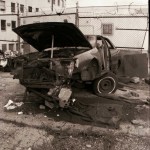
    In 2001, we came across the historic remains of the Brooklyn City Railroad Company powerhouse. Inside, we found a gross tribute to late stage capitalism.

    (Original write up from July 2001 (with minor edits) – Building history & Update below)

    One fine summer evening we ended our day of exploring here. As we approach the large hole in the front wall a guy that looks like he should work at a gas station emerges, grumbling to himself. Usually that sort of thing is a bad sign, but there’s 4 of us and one of him. Unfazed, we walk right in.

    Curiously, Mr. hobo-asshole comes back into the building behind us, and goes past us into a dark corner. We did the usually ‘hey what’s up?’ thing, had cameras out, and made it pretty obvious we were no sort of threat to whatever he was up to. People who are drunk, drugged and fucked up though, living in such conditions as this – as a rat amongst trash piles and battered car shells, just don’t trust anyone… as we’d later find out.

    Going In

    Looking west

    Destroyed Jag
    Insides, 2001

    The building itself was fantastic. The ceiling which once was likely composed of glass, has been smashed into oblivion. This created a nice light filled room on the first floor. Steps lead down to a smelly basement, and up to a second floor, which is the direction we take. There’s a traveling crane that covers the top of the building, so it’s safe to guess this place was once used for power generating or some other large scale industrial use. From here, one might find a hole into a second large room in the back of the building, where trash is less abundant and streamers hang from the ceiling as if someone decided to throw a party or two in this darkened room. It definitely would have made a suitable location for those early & mid 1990s rave parties common in such spaces around town at the time.

    We climb back out to the front of the second floor, and poke around a little more. I look out the doorway that leads down to the first large room where we entered, and notice 2 bewildered looking cops looking around as if they’re lost. I turn from the door and step towards everyone else… a little surprised by the sight. I had never seen actual uniformed cops in an abandoned building before.

    “The cops are here”.

    BrokeMyTV

    Hooked

    Open Cautioning

    Saying it was the only way to compute the information. What the hell were they doing here? I realized they probably spotted me in the door a second ago, so I turn back and call on down “yo – what’s up’? If they didn’t look confused before, now they really were. The rookie and the white shirt lieutenant march on up the steps. When they get to the top of the steps and the doorway, I improvise the most obvious statement:

    “Step into my office gentlemen”.

    Calm, cool, and collected. It’s the only way to be. Any potential negative confrontation is dispelled immediately. What are we doing here? Taking photos. Hello! We’ve got at least 5 cameras amongst us! All already out in the open. It was frankly hilarious how we all said the same thing at the same time.

    They give the usually schtick (I suppose) about PCBs, Asbestos, lead paint, and dangerous hobos. I think the only dangerous thing about the hobos around here are that they had to call a proxy defense… for what? As if we’d want to take some hobo’s junk…

    We all walk out and go our merry way. No names taken or anything like that. It was the first, and so far last, time we’ve ever encountered the police at such a place.

    Fusebox

    Crane Gears

    Top Floor

    History
    The building was constructed in 1892 by the Brooklyn City Railroad Company for use as a power plant for the municipally owned trolley system. The building was used for electrical generation until the 1930s when the trolley system was abandoned. The facility was conveyed to the city of New York in 1940. In 1951, the property was sold and the parcel was subdivided into two lots (Lot 9 and Lot 6). On 5 September 1951, Lot 9 was sold to Empire Electric which operated on Lot 9, the eastern two-thirds of the building, from 1951 to December 1986 when the property was once again sold. During at least some of this time period, activities within the building included rehabilitation of electrical transformers containing polychlorinated biphenyls. The site has been vacant since at least 1998 and is currently roofless and in severally deteriorated condition. Scaffolding has been erected around the perimeter to protect passer-bys
    on the sidewalks from falling bricks.

    Based upon investigations conducted to date, the primary contaminants of concern are PCBs. Building material (brick and mortar contained PCB concentrations in excess of 50 ppm, the New York State and Federal Toxic Substance Control Act (TSCA) definition of PCB hazardous waste, in 35 percent of the 165 analyzed samples. Sample analysis of the floor slabs indicated, 60 percent of the concrete slab on the main floor and 80 percent of the concrete slab in the basement area exceed this criteria and are therefore classified as a State/TSCA hazardous waste.

    SC crew graffiti

    Top

    Looking out the doorway just before the cops appeared below

    Grease/oil samples collected from building material in the basement present on nearly 70 percent of brick pillar surfaces, also exceeded the TSCA criteria of 50 ppm total PCBs. Fifty-two of the 165 building material samples collected and analyzed contained levels of PCB contamination ranging from 51 ppm to 33,000 ppm.

    A limited number of soil samples which could be collected from beneath the basement floor exceeded the 1ppm surface/10ppm subsurface soil cleanup presumptive remedy for PCB contamination in soil. Two of these soil samples also exceeded the hazardous waste levels. Further characterization of the vertical and horizontal extent of the PCB contamination is needed but is precluded by the limited access in the basement areas. The site presents a significant environmental threat due to the potential for PCB releases from source areas both within and beneath the building.
    (Source: Interim Remedial Measure Decision Document – Division of Environmental Remediation. Empire Electric Site
    Brooklyn, Kings County, New York. Site No. 224015, September 2012)

    Exterior, I believe in 2003

    2003 - plenty of hobo camps

    2003 - plenty of hobo camps

    2003 - plenty of hobo camps

    Update. March 2014:
    Demolition work on this building is set to begin within the next few years. When we first ventured into this building, there wasn’t any information about it online. Reflecting upon that visit in 2001, it’s interesting that the police officer that day knew the building was contaminated (I was young and skeptical), and explained why we should leave – yet didn’t evict the homeless guy. I would hazard a guess that they knew he’d just go back in, and some other city department was in charge of (and neglecting to) seal up the building. it was at least a year before the entrance was sealed. Since then few have bothered to try to enter this building illegally (though one or two people did get photos with legal permission). It wouldn’t be hard to get in via the scaffold, though I honestly wouldn’t recommend anyone spend actual time and effort breaking into this one, unless you reaaaaally want to see it before it’s gone.

    Update #2 – August 2016:
    Building Demolition has begun, and will likely be finished within the next month.

    IMG_5128

  • Triplex Oil Refinery, aka ‘Quanta Resources Site’

    Triplex Oil Refinery, aka ‘Quanta Resources Site’


    History
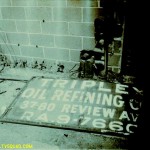
    The Quanta Resources Site is an approximately 1.8 acre parcel located at 37-80 Review Avenue, within a highly industrialized area of Long Island City, Queens, New York.

    A Sanborn Fire Insurance Map from 1898 indicates that the site was partially occupied by vacant and dilapidated brick wrecks of an oil refinery. Available information indicates the earliest recorded actual owner of the property was American Agricultural Chemical Company. In 1931 the property was transferred to Triplex Oil. Triplex Oil used the property for refining of used crank case oil for approximately 40 years. From 1972 until 1980 the facility was operated by several different owners including Pentalic Corporation, Sea Lion Corporation, Ag-met Oil Service, Inc., Hudson Oil Refining Corp., and Portland Holding Corp. In 1980 Quanta Resources acquired the property, and used the property for the re-refining of used crankcase oil and other liquid recycling before filing for bankruptcy on October 6, 1981. The site has been inactive since being abandoned in November 1981. Tanks and several buildings remain on site. A number of potential LNAPL source areas existed on the Quanta Resources Site throughout its operational history, however, the primary suspected source area is the tank farm area located in the northeastern portion of the site. A New York City emergency remedial action removed approximately 640,000 gallons of waste oil from the property. Some of the waste oil contained tetrachloroethene, methyl chloride, 1,1,1-trichloroethane and trichloroethene. Sludge, waste oil, and diesel fuel, all contaminated with PCBs, were also removed from badly deteriorated leaking tanks and drums. As part of NYSDEC’s Phase II Investigation, three on-site groundwater monitoring wells were installed. During installation it was discovered that there was a seven foot layer of oil lying above the groundwater table. A PRAP Public Meeting was held on June 28, 2006 and the public comment period closed on August 3, 2006. The ROD was signed 2/9/07 requiring a $15,560,000 remedy which includes an LNAPL recovery system. See C241005 for post ROD updates.

    The site presents a significant threat due to the soil and groundwater contamination, free product LNAPL plume and close proximity to Newtown Creek. Soil and groundwater contamination has been confirmed. The primary contaminants of concern include petroleum hydrocarbons, chlorinated solvents, heavy metals and PAHs. Measurable LNAPL was found in 24 of 29 onsite and offsite monitoring wells.

    Waste oil previously stored on-site has caused widespread contamination of groundwater and soils. Approximately 500,000 gallons of contaminated waste oil remains at the site, floating on the water table. The aquifer of concern is not used as a source for drinking water. Groundwater wells in this area of Queens are used only for commercial and industrial purposes. A fence surrounds the site restricting access and minimizing the potential for direct contact exposures to on-site contaminates. The potential exists for the floating oil plume to migrate into the nearby Newtown Creek which empties into the East River. Further investigation is required.

    Source: http://www.habitatmap.org/markers?marker_id=108-quanta-resources – Accessed 4/16/2013

    Adventure
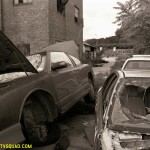
    My first trip into this place was a late night mission with ‘Ms Rabbit’ – a ridiculously hot girl I went on endless adventures with through the 1990s. When we stumbled across this place, it seemed like the perfect playground: open, clearly abandoned, and in the middle of nowhere. The lot was tightly packed with abandoned cars, which we started climbing over to make our way around the building and storage tanks which were at the center of the property. When we got to the rear of the building, we found hostility.

    From the back of a trailer a pack of drunken middle aged guys started stumbling around. “Hey! Girls!’ Come Here!”

    I immediately placed my hand on my concealed weapon and growled ‘we’re not women’. Clearly they mistook the long hair I had at the time, though there was no hiding Rabbit’s curves. This was one of those rare cases where her looks and charm would not curry favor. I wasn’t too worried though, the kitten had claws.

    They seemed really drunk and confused. We backed out, and found greener pastures for adventure that evening.

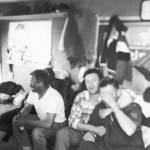
    I wasn’t done though. I came back during daylight hours, scouting it out once on my own and returning with a larger well armed group of young guns later. During my scouting trip I ran into the residents of this oil refinery – a group of a dozen drunken polish squatters. Back in the late 90s it wasn’t uncommon to stumble across groups of polish squatters at industrial sites near Northern Brooklyn / Greenpoint (which was and still is to a degree an extremely polish neighborhood). I say they were severe alcoholics because my scouting took place on a Sunday morning at noon – and they were already drinking. One of them insisted I come over to their trailer to take their photo. I don’t usually do so, as I don’t like to exploit the misery of the homeless. Just inside the door was a dirty blond lady who lived there, commenting on ‘see, this is the way people live’ – as if in disgust. Inside were half a dozen of them watching a soccer game. None of them knew beyond a few words of English.

    When I returned a few weeks later with a group, their trailer had been torched. No one was around.

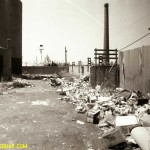
    Within a year or two of this final visit in the spring of 2001, the facility was dismantled. Today it is a truck parking lot. It remains a superfund site with cleanup pending. It is just one more former industrial location now wiped clean from current NYC maps.

    Update: November 2014:
    A neighboring property owner is now trying to sue to get the land cleaned up – citing very high and dangerous methane levels in the ground.

    “Lawyers for a Queens beverage company are sounding the alarm that there’s an imminent threat of an explosion at its Long Island City warehouse due to methane gas leaking from waste oil at the adjacent property, the Daily News has learned.

    They’re seeking an injunction in Brooklyn Federal Court ordering Exxon Mobil to deal with the longstanding problem at the contaminated site where recent tests show methane gas readings are 10 times the acceptable level of risk, according to court papers.” (NY Daily News – accessed November 4, 2014)

  • What was it? Ruins along the South Brooklyn Railway

    What was it? Ruins along the South Brooklyn Railway


    Original publication date: May 1, 2001, Updated & re-posted: Feb. 16, 2014.
    What was it? This new category of blog posts will feature locations around NYC that I’ve explored, but haven’t had the time to dig up good historic information on. It is my hope that someone out there will be able to comment below and let us all know – what was it? Today’s feature was located along another Brooklyn abandonment: The South Brooklyn Railway

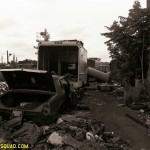
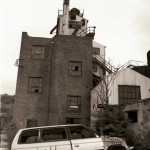
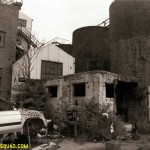
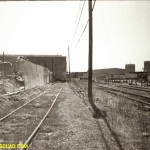
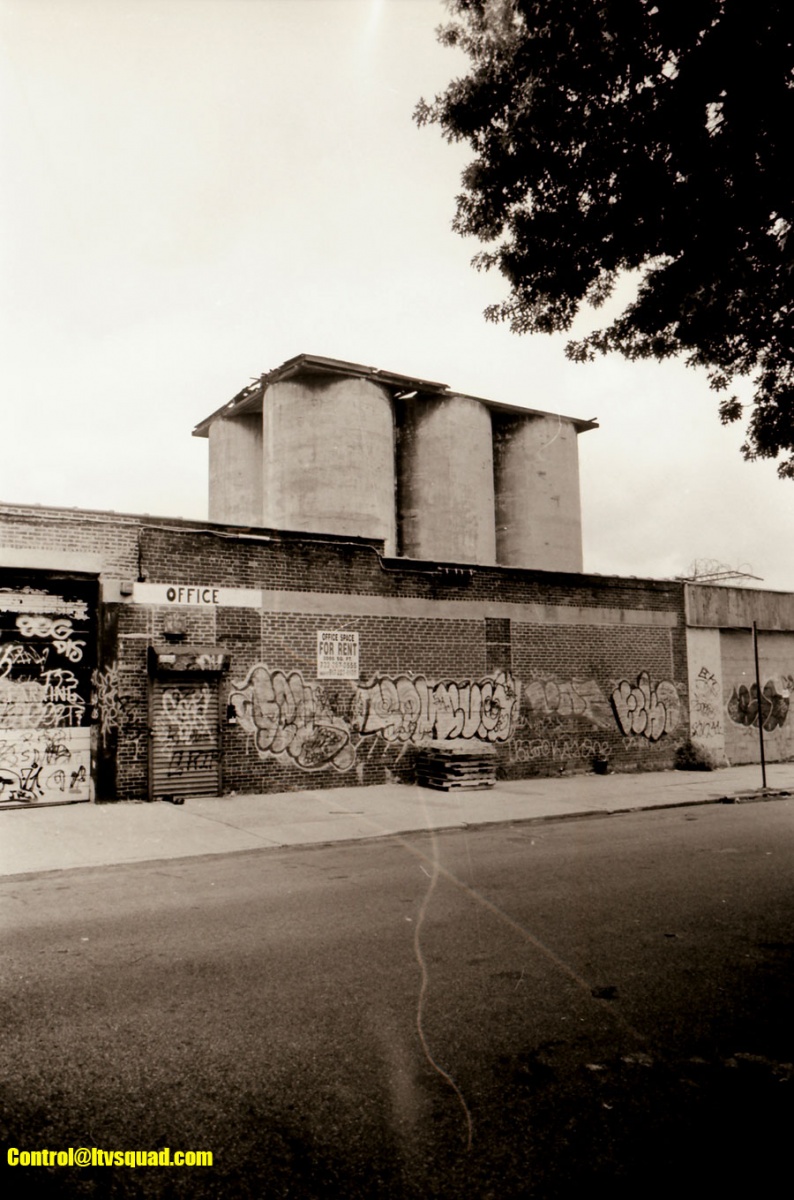
    Outside of it’s address (1242 38th street, Brooklyn NY), I know little about what this facility was used for. There are however some clues to be found in the photos and the building’s location.

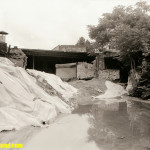
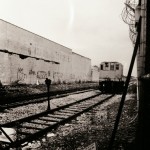
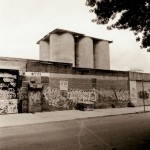
    This place was located just south of the former South Brooklyn Railway (or SBK for short) which ran from the waterfront, along 37th street under the old Culver Shuttle, and hooked south along MacDonald avenue to what is today’s NYCTA Coney Island yard. Thus it’s a fairly good guess that at some point they received freight via these tracks. By the 1980s, these tracks were severely neglected and judging from these photos of cars parked on the tracks – completely disused. One might also assume this building was likely abandoned around the same time period. Sometime after 2001, the building and silos were demolished. Curiously the NYC Dept. of Buildings seems to have no permits on file for such work. Certainly someone was being paid to look the other way.

    Here’s my original write up from the spring of 2001:
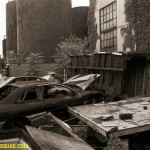
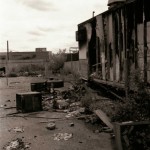
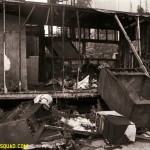
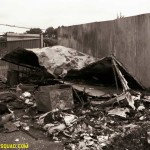
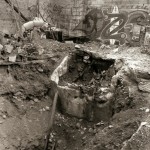
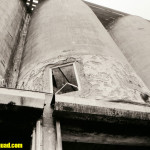
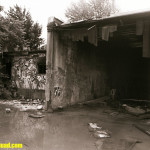
    “From the exterior on one street, all one can see are graffiti coated brick walls, but if you circle around the block, one might find a hole in the back wall which leads directly under the 6 large silos that dominate the structures. What these silos were used to store is unknown. Was it coal? Sand? With the large piles of sand nearby, one can guess that this building later saw use as some sort of aggregates supplier. Today, there’s not much left of the place – it is as if someone drove a bulldozer through the place and dug up any dead bodies buried here (or maybe just a below-surface storage tank?). Everything has been destroyed and gutted, leaving no evidence of what function this facility once served.”

    So what was it?

    Update 2018:
    Turns out this was the former location of the Klein Coal company. Back when nearly everyone in Brooklyn used Coal to heat their homes, Klein sold it. They received freight carloads of coal from the anthracite hills of Pennsylvania.

  • Honeywell Avenue Bridge

    Honeywell Avenue Bridge


    Original Write up: April 2, 2001
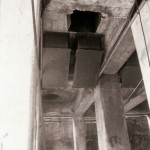
    Honeywell Avenue is one long bridge which spans 2 rail yards and the LIRR/Amtrak mainline funnel of tracks from LI and Boston into Manhattan. This generally unnoticed bridge has been abandoned since 1979, and only recently (i.e. – today 4/2/2001) begun to be rebuilt.
    (more…)