Category: Queens Commuter Rail

Anything and everything related to Queens rail transit needs.

  • The Inter-borough Express: Better but not quite there.

    The Inter-borough Express: Better but not quite there.

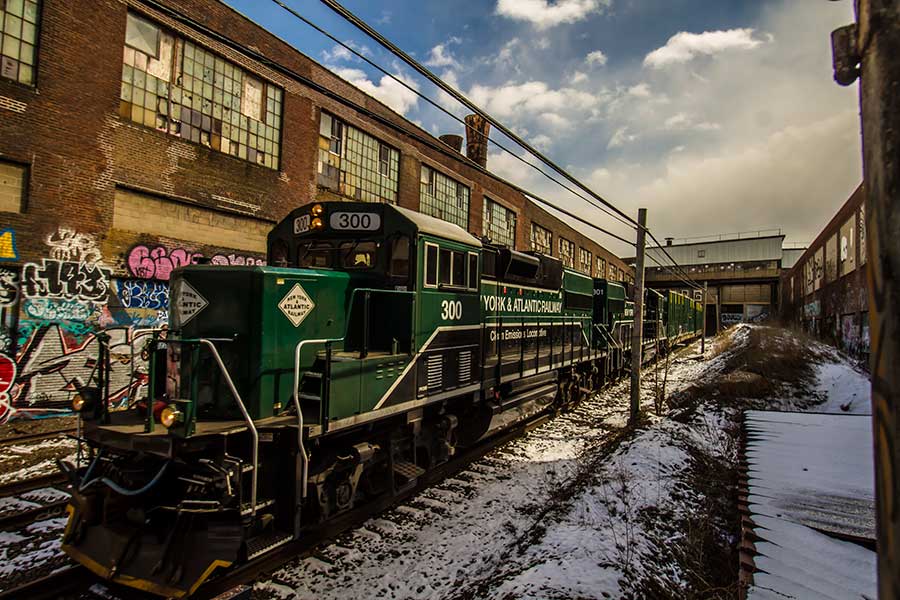
    Long Heavy freight trains and Subway Cars do not mix.

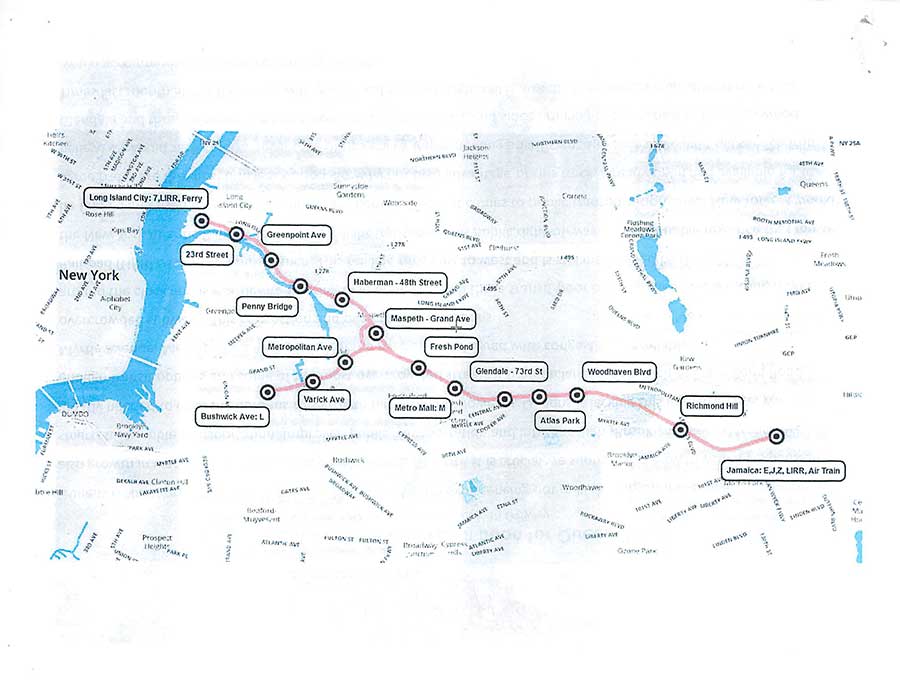
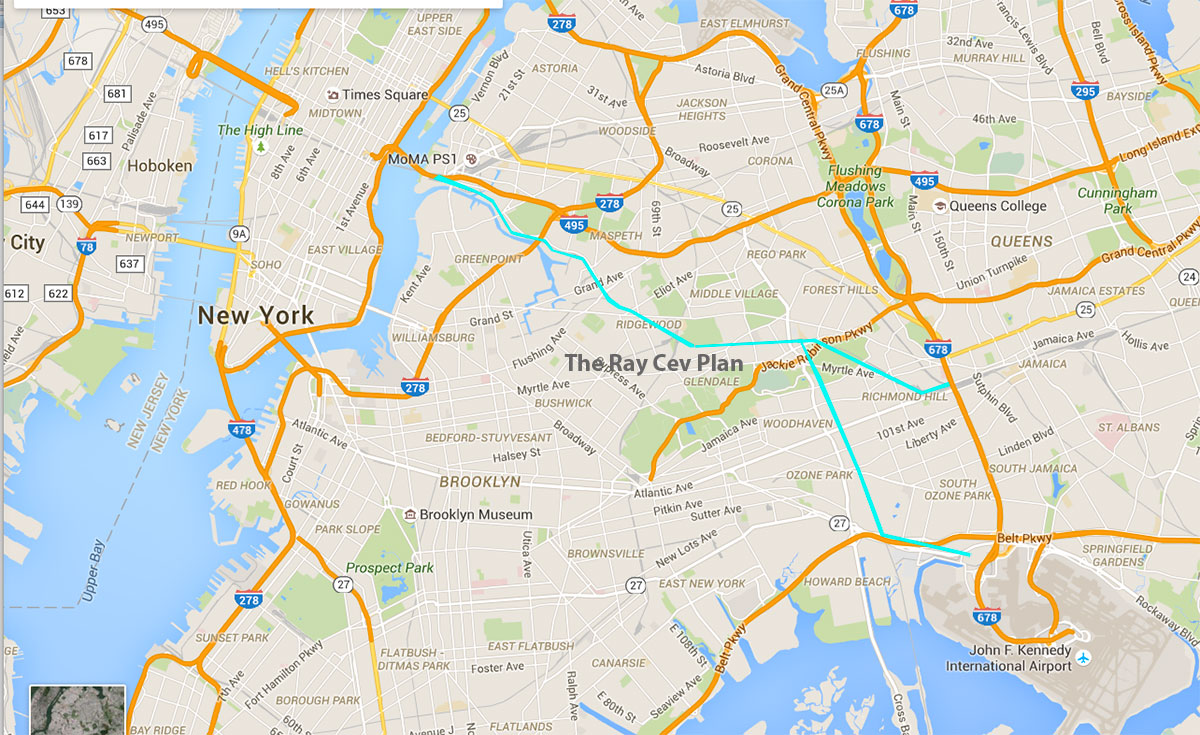
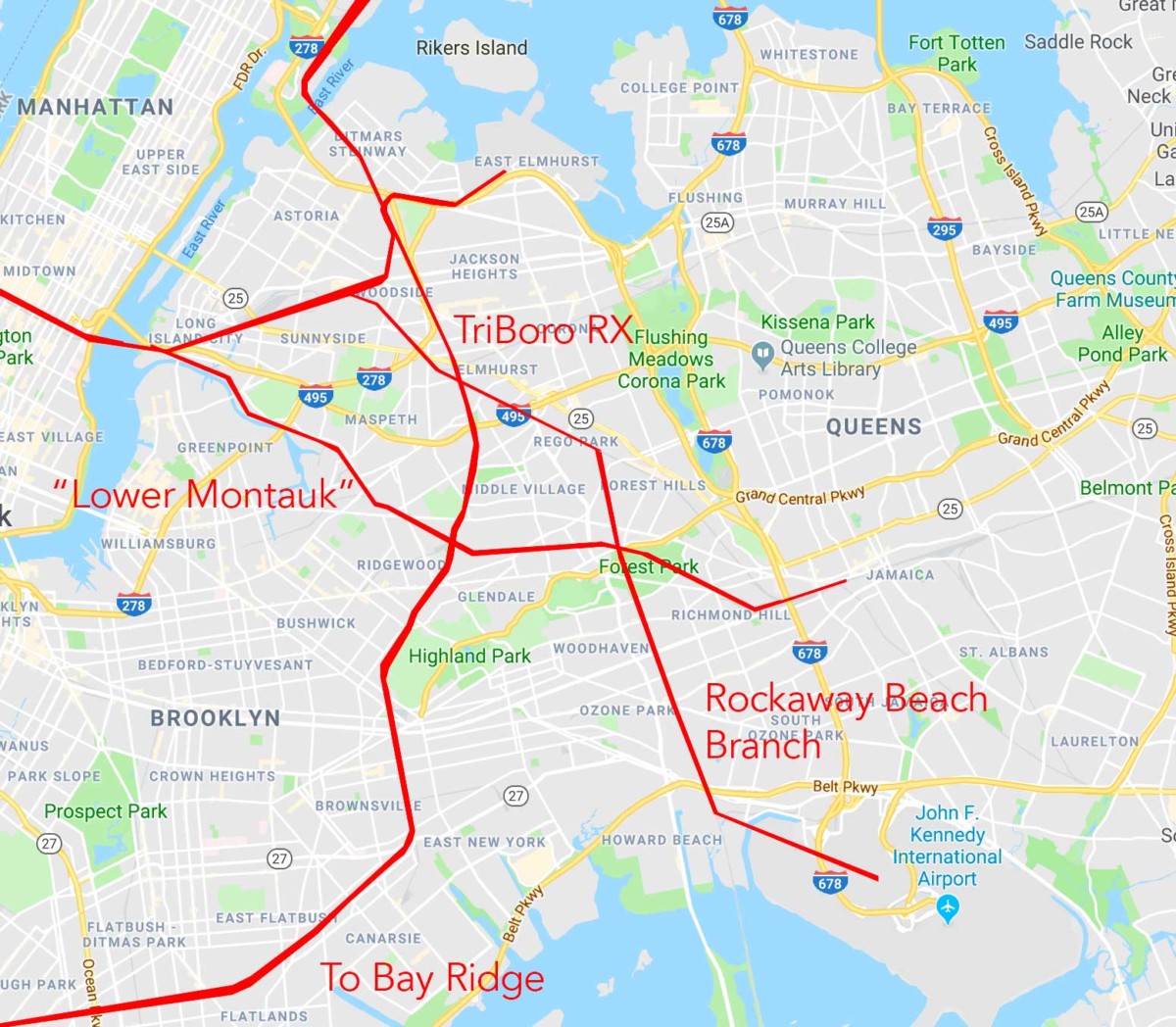
    Nearly ten years ago, I wrote about the ‘Triboro RX’, a plan to bring passenger trains to the freight tracks of Queens, Brooklyn and the Bronx. That plan has never gone anywhere, until now. It has re-emerged as the “Inter-borough Express”—a plan to bring passenger trains to much of the same route, with the exception of running over Hell Gate bridge to the Bronx. The plan was introduced by New York State’s latest governor, Kathy Hochul, and came with a study conducted by the MTA and their consultants.

    When I wrote about the Triboro RX, in 2013, I tore the plan to shreds. It deserved to be shredded. It has always been a great idea but a very weak plan. It begged for the critique. Critiques make designs stronger, and the Interborough express plan is definitely a stronger idea now. I’d be surprised if that’s not due in some small part to what I wrote.

    So the new plan is a stronger plan, but it’s not quite there yet. I’m going to give the new ‘interborough express’ study a fast, stiff critique. If the governor’s office is wise, they’ll eat up every word of this. I’m sure AECOM would charge a million dollars for what I’m going to throw down right here for free.

    For this critique, I will quote heavily from this NY1 article on the topic. Let’s go:

    “Is it bus rapid transit? Is it light rail? Is it heavy rail?” Hochul said at a news conference. “We don’t have those answers today, but we know we have a path forward.”

    Hi. I have an answer. The answer is “how much do you want this to cost?”

    Bus rapid transit or light rail would require a deck to be built over many parts of the route, in order to separate non-FRA safety complaint vehicles with the very heavy freight trains that currently ply these tracks. The price tag for this, and the timeline to get it built, would be huge. In addition you’d have to hire a large number of bus drivers to move fewer people than you could by train. It’s a nice idea, but boy howdy it would cost billions—which would be a weird flex for an organization that has spent the last fifty years pleading poverty and regularly raising train fares.

    Heavy rail, assuming you define that as FRA-compliant trains (like the ones Metro North and Long Island Rail Road uses) could make use of the existing (albeit heavily upgraded) tracks. To save even more money, they *could* use diesel or battery powered trains on this route. The LIRR is already experimenting with battery powered trains. If they run through to the Bronx, they could charge while running through electrified territory as far as New Haven (bringing back an air of this former New Haven Railroad’s former glory).

    Using such trains shouldn’t lead anyone to assume commuters would have to pay Metro North or LIRR prices. A city pass that works across subways, LIRR & Metro North within city limits is long overdue. Tax landlords more. Institute congestion pricing. Who cares? Want to help save the planet? Get it done Hochul.

    Let’s go back to that NY1 article: “Conventional rail trains could use the existing track, with a third rail power source added, while light rail would use overhead power lines.” – this quote is also not true. FRA compliant trains can be powered by diesel locomotives, batteries (an emerging technology that’s still under development), overhead power (see Metro North’s New Haven line) or third rail (Metro North, LIRR). There are plenty of options. Which one is going to be cost effective and the most environmentally friendly? That’s the real question. And if we go with electric trains, can someone, please for the love of god, cover every station and available space along the tracks with solar panels? The Con Ed cabal doesn’t need any more of our money.

    The study document also contains one huge, glaring error that is just inexcusable. Here it is: “While most of the corridor only has one active freight track, the IBX alternatives would need to preserve space for two freight tracks to accommodate future growth in freight traffic on the corridor. The only point where that is not feasible is the East New York Tunnel, which does not have enough width for more than one freight track alongside the IBX. Barring the construction of an additional tunnel, this location could be a choke point for future freight traffic”

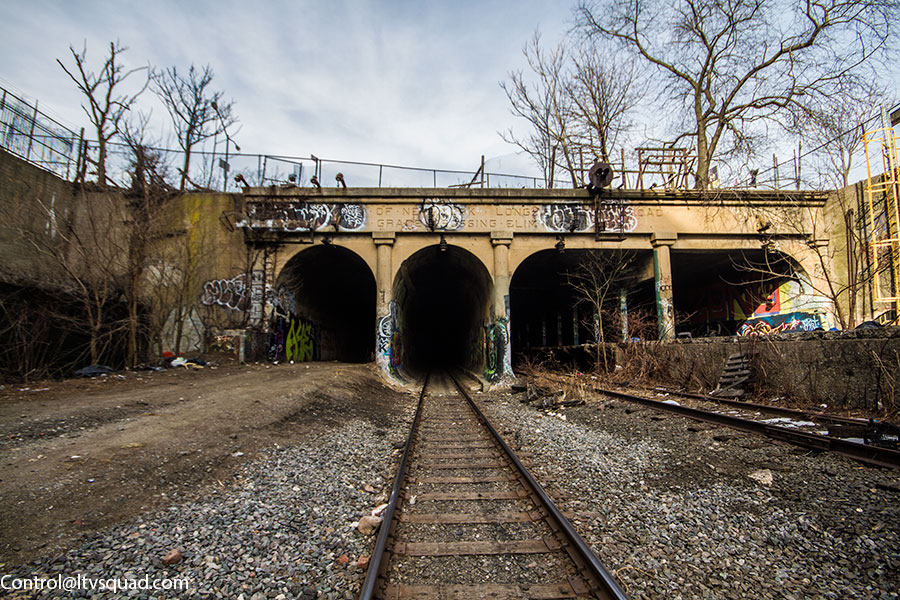
    This is FALSE. The East New York freight tunnel was built for FOUR tracks. Don’t take my word for it. JUST LOOK AT IT.
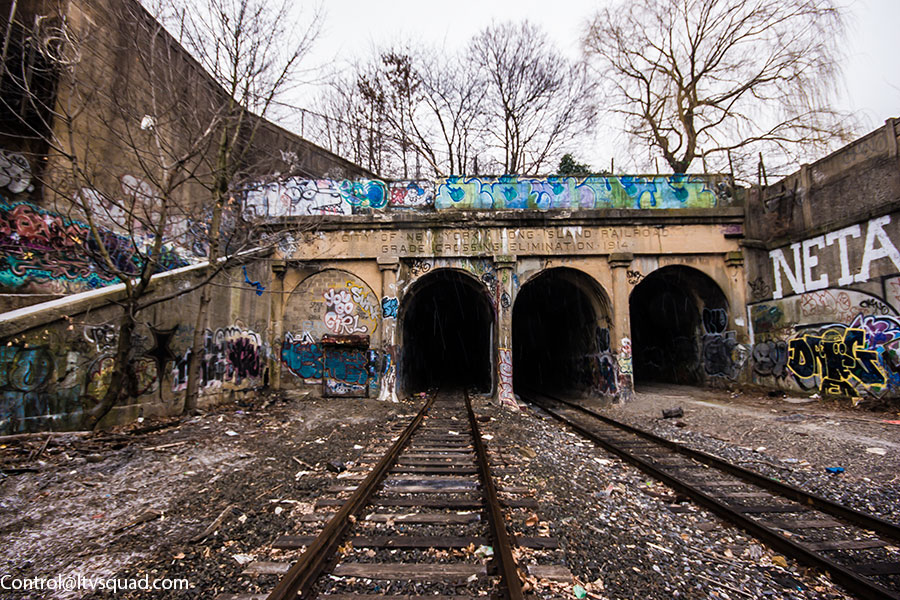
    East New York Tunnel

    In this photo you can see one track-less tunnel on the east side, one active freight track (lowered for added clearance in the 1980s), a second freight track (currently used for storage) and a fourth, bricked over trackway that currently hosts a small pipeline. Move the pipe and you’ve got four tracks. More than enough for freight and passenger trains. That’s actually how this tunnel functioned until the 1920s. It still contains an abandoned passenger station on it’s south end. Just look at the photo below.

    IDK call me crazy but if the consultants who wrote this latest study can’t get an extremely simple fact like this one correct, maybe the MTA should look to some actual experts to advice them on this (and other) projects. We’re not hard to find.
    ENY abandoned station
    The latest study basically says freight and passenger trains can’t exist here, where both existed 100 years ago. Yes, that’s an abandoned station on the right.


    The actual choke point is the entire Fresh Pond Junction/Fremont yard to the north of the tunnel. It’s congested and packed with freight cars. Running passenger trains through this yard will require some major changes and added freight tracks elsewhere. This problem is as true today as when I first explained it in 2013. Let’s talk about real, existing problems, and how to solve them. I’m 100% sure additional track capacity could be built somewhere else to solve this riddle.

    The missing 4000
    While we’re mocking this latest report for a minute, check out this line: “The study projects that the Interborough Express would ferry 10,000 riders from Queens to Brooklyn daily, with 6,000 riders going the other direction. “

    So… 4000 queens residents just disappear into Brooklyn every day? If I just did my math right, the entire 2,405,464 population of Queens would empty out into Brooklyn using these tracks within two years. Does the governor and Mr. Swagger have a plan for where 2.4M people will live in Brooklyn? Or what they’ll do with an empty Queens?

    Yes I’m cracking a joke here, but also, how can anyone take these studies seriously when they spout this nonsense? Where did they get these numbers? What are they based off of? And where did those 4000 people go? Seriously? Don’t give people like me numbers without showing your sources in complete detail.

    Connection to the Bronx. Why not?
    For my final critique, let’s tackle this studies huge, flawed thesis about running trains to the Bronx: “The study suggests that extending the line through Astoria, Randalls Island and across the Bronx — a central component of the original concept for the three-borough line — would see significant challenges. The MTA would need to build a new train line, as existing rails along the route could not accommodate the anticipated 5-minute headways on the Brooklyn-Queens line. The extension would also require significant property purchases, whereas the Brooklyn-Queens section has an existing right-of-way on already-built tracks.”

    That’s a lot to digest, but if you read what I wrote nearly ten years ago, you wouldn’t be surprised by this conclusion. At the time I wrote about what it would take to expand the viaduct through Astoria: “To expand the viaduct would mean the condemnation and demolition of up to 85 homes along the viaduct, along with at least one church and the Astoria 11105 Post Office. Most of these 85 homes are currently valued in the 700-900k dollar range (2013 prices – these go up every year by at least 50k). After demolition, you’ve just spend at least 85 million just to create space for the wider viaduct – not including all the lawsuits, police overtime at protests, etc. The cost of iron, new wider bridge piers, etc would run into the billions. And this is for maybe a 2 mile segment of the route!

    Additionally, to build a new stop connecting to the N/W trains, you’d have to close Ditmars Blvd stop for a long time. Since Ditmars is the terminal of the Astoria elevated line, and there’s nowhere else to turn subways, they’d probably have to cut off service to the entire Astoria elevated, terminating the N and Queens Plaza. So yeah there would have to be modifications to the current route (switches and a temporary terminal at Astoria Blvd) or shuttle buses. Like, a lot of shuttle buses. Hundreds of shuttle buses.

    So, uh, yeah I can see how the latest MTA study would conclude that it would just plain cost way way too much money to run from Queens to the Bronx. BUT… is it? Did they base this decision off what a very snarky, very correct me wrote nearly ten years ago? Because it sure as f*ck looks that way.

    Factually, in terms of cost and social unrest, I stand by by words. However, this is where I admit to a lack of imagination ten years ago. There are options.

    Maybe not build this one station?
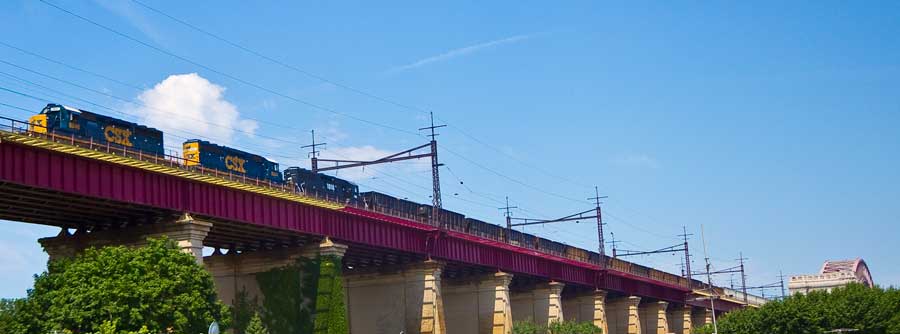
    The Inter-Borough Express and N/W subway transfer would be great – but does it need to exist? If this is the only thing holding the extension back, should it? I would say no. Rebuild CSX’s track over Hell Gate. Relay the 4th track (that was taken out in the early 80s), run trains. Run trains all the way to New Haven. Why not? FRA complaint trains, on the same freight track CSX uses. This is 100% possible at a minimal cost.

    The only current physical blocker to running trains to the Bronx is the CSX interchange. For those that don’t know, CSX and New York & Atlantic (which moves freight across Brooklyn, Queens and Long Island), now swap train cars in Woodside (they used to do that at Fresh Pond, but again, it’s too congested). CSX owns the tracks. They could just sell them to the MTA, and New York and Atlantic could bring those cars up to the Bronx. THIS ISN’T ROCKET SCIENCE.

    Maybe build it, knowing it’s not going to be perfect?
    That said, let’s get back to our Ditmars transfer. What if the passenger tracks were just a single track through the station, allowing space for a platform? Sure, timing would be a thing, but the MTA manages this just fine in parts of the existing system. Just look at the junction where the M branches off from the J line. Sure it’s less than ideal, and hurts capacity to a degree. But you want to know what would truly kill capacity? Not running the train at all.

    What if this station was just a single platform added on to the north side, with two tracks running through and only one used for the stop? It would be less than ideal, but a transfer in one direction is better than zero transfers in either direction.

    In my 2013 assessment, I stated widening the viaduct for 5 tracks would involve condemning and demolishing nearly a hundred homes in Astoria. But if we run FRA complaint trains on just two tracks, which Hell Gate bridge was designed to accommodate without costing anyone a dime today—that cost—and that destruction-doesn’t take place at all. In fact, to build a single track transfer station at Ditmars, they could minimize demolition to just one or two buildings, leveraging the existing parking lot between 31st and 33rd streets as space for a transfer building. The city owns that parking lot. Minimal property purchases needed.
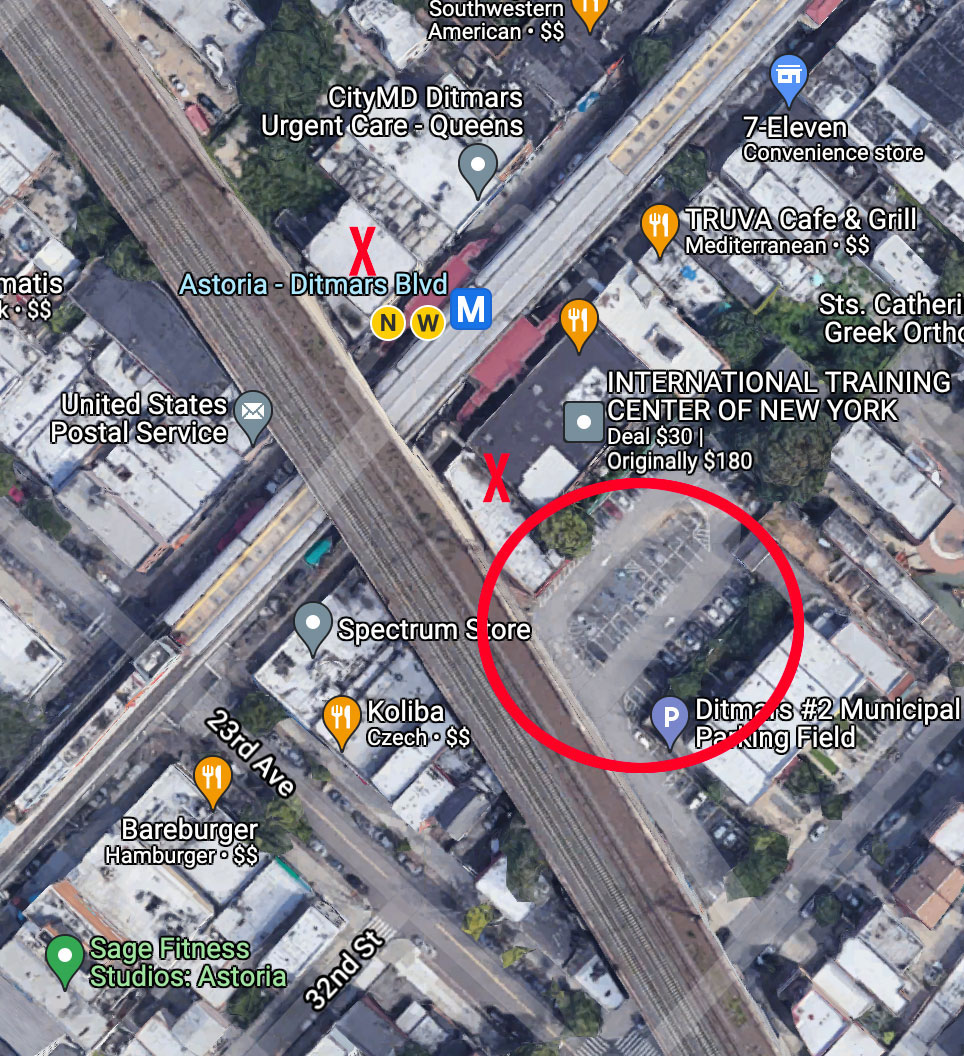
    The Red X’s represent buildings that would need to be demolished. The Big Red circle is a city owned parking lot. A perfect place for a very grand transfer building.


    Additional options include adding switches at Bowery Bay Junction (where the present day freight tracks and Amtrak split), which would allow freight trains to roll on Amtrak’s tracks over the bridge, and vice versa. There are options to make this connection happen. They would require a lot of work , but what are problems if not for solving? One small step at a time?

    Maybe if this transfer is hugely popular, maybe it requires a ton of planning and some property purchases around the 31st street area. Again, problems want solutions. it would be messy, but it could get done, without building entire additional tracks (or any additional bridge and viaduct).
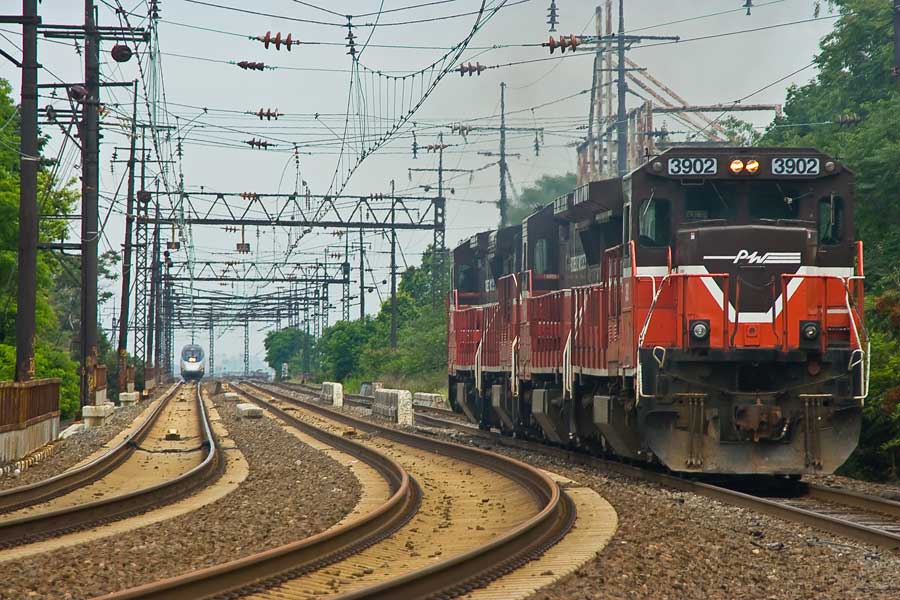
    Clearly not a busy corridor...
    Bowery Bay Junction, where the freight tracks and Amtrak meet up, but do not actually connect.


    Running trains up to and through the Bronx would have HUGE benefits. The study assumes they can build a storage yard at 65th street in Brooklyn. That yard is already packed with freight. By running passenger trains all the way through the Bronx, the could leverage existing Metro North shops and expand storage yards up north, where there is more property available. It would also serve the people of the Bronx. Don’t they deserve better transit too? This becomes a social justice issue once you start excluding populations for dubious reasons.

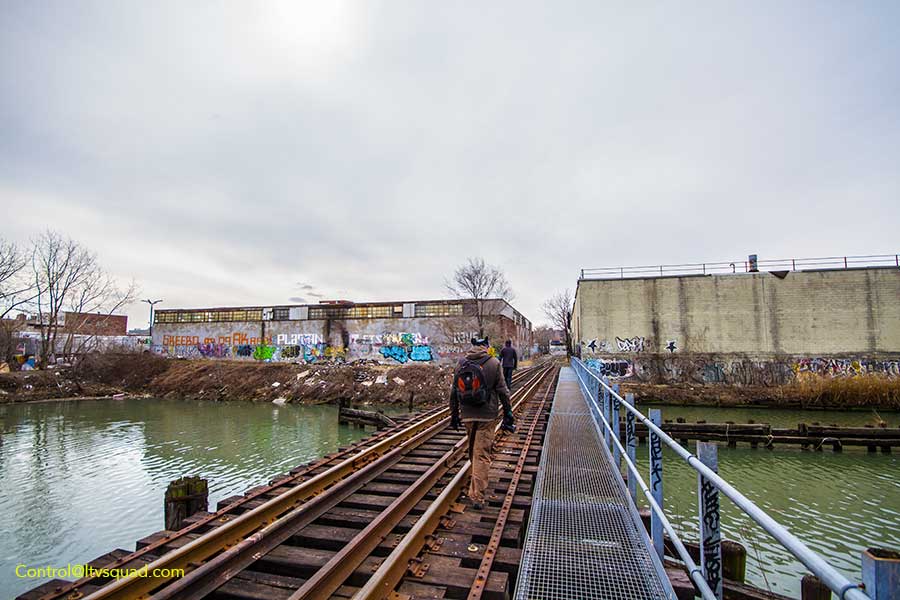
    A footnote here on social justice: There are a few long term residents of these tracks, who have lived in discreet, hidden camps along this route. Some have lived there for over ten years. Needless to say these people should be provided with proper housing.

    In conclusion, there’s no valid reason why this train can’t go to the Bronx. A transfer at Ditmars would be problematic, but not impossible. Yes, CSX owns the tracks, but they have sold tracks for transit use before, so long as their access to move freight was guaranteed. Just last year they sold a key in their network route to the state of Virginia. They are a for-profit corporation. While they make bank moving freight in and out of NYC, they could still make that bank and not pay for maintaining the tracks. Then New York State could better control their destiny on this route.


    LaGuardia connection
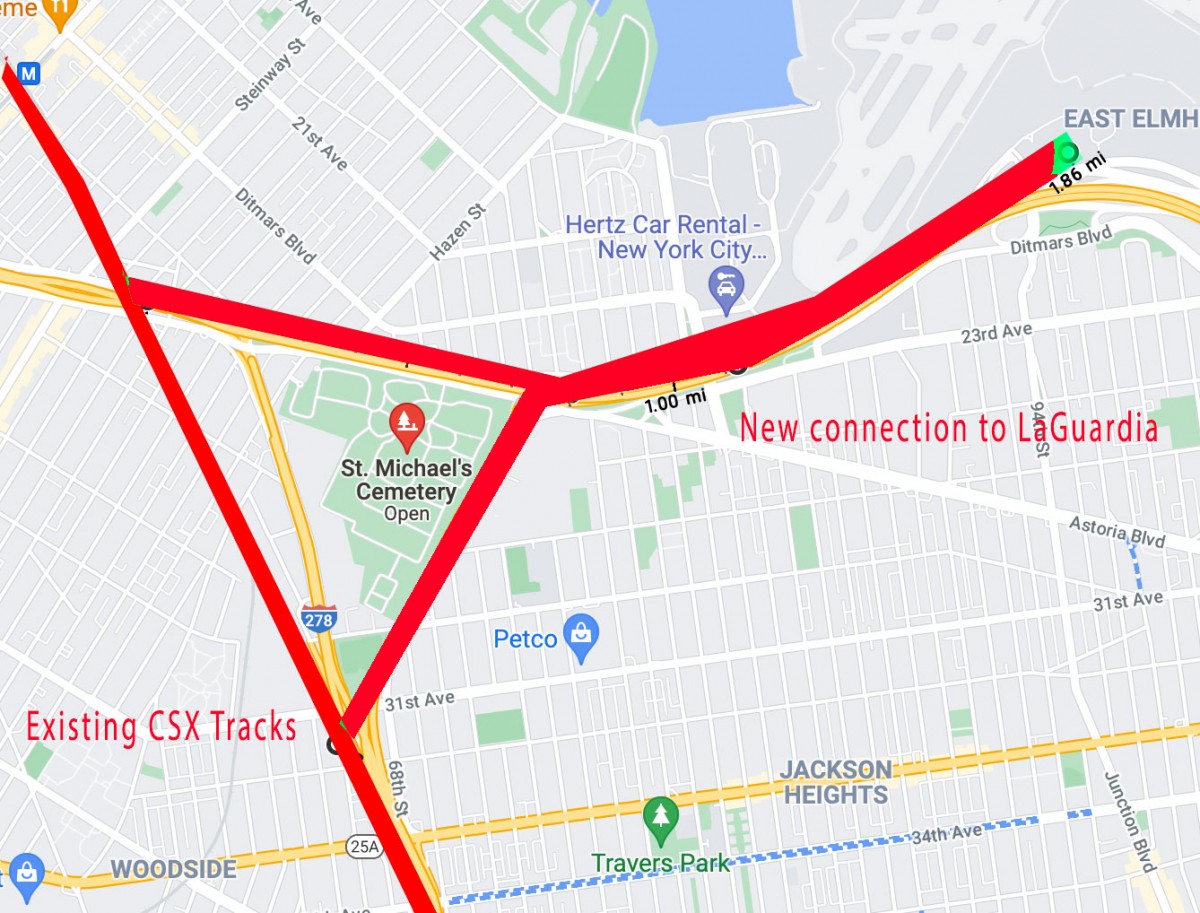
    While we’re here, a whole new branch could be built above the Grand Central Parkway, providing a rail connection to LaGuardia Airport. It’s a mere two miles away, and a viaduct could be placed directly over existing highways, eliminating the cost of buying property. If Cuomo could scare up money for his backwards Air Train plan, I’m sure we can find money for this—a connection that would give residents from across the entire city (and Westchester even) access to the airport.


    So that’s my critique. The Interborough Express plan is far, far better than the navel gazing, fantasy based “Triboro RX’ plan simply because it acknowledges some existing constraints and looks for paths forward. That’s huge. That’s the reality-based mindset that could get this job done. Look for the paths forward. They are there, screaming to be noticed.

    From here forward, it’s just a matter of costs. The cheapest, simplest option, diesel or battery hauled FRA Complaint trains, could be implemented within five years. If I had to hazard a guess, I’d say a billion dollars to get this done. A low price tag would be great, because it would allow more money to take up other equally deserving transit projects, like reopening the tracks for QueensLink.

    The other options—decking over tracks for light rail, adding third rails or overhead power, figuring out how to deal with a transfer at Ditmars… all those things add up cost. That decking idea looks great but we’re now talking billions to make this route happen, and adding years upon years to the construction timeline. Does NYC really have time for that? Does our planet have time for that? Adding this transit route would be huge for NYC’s efforts to get more people out of cars, and to create a safer, more ecologically friendly city. I’m 100% all for it. Now let’s figure out the details, without making it so expensive and time consuming that it never gets done. Wouldn’t that be nice? To actually build something for a reasonable amount of money? To actually get the job done in our lifetimes? To not recreate another long delayed money pit, like the East Side Access and Second Avenue Stubway projects?

    The governor has an opportunity here to actually get something done. Assuming she’s re-elected, and she plays her cards right (and actually listens to us advocates), she could find herself cutting the ribbon on this thing while still in office.

    I don’t care whose ego gets stroked. Let’s just get this done already. NYC needs it.
  • Build Everything: Queens Needs Transit.

    Build Everything: Queens Needs Transit.

    Over the years, we’ve published a few catty articles on this site that attacked some poorly thought out new transit ideas running through Queens. So let’s be clear: we need to build all of it.
    (more…)

  • ‘Qns’ Lower Montauk Study Transit Stumbles into Public View.

    ‘Qns’ Lower Montauk Study Transit Stumbles into Public View.


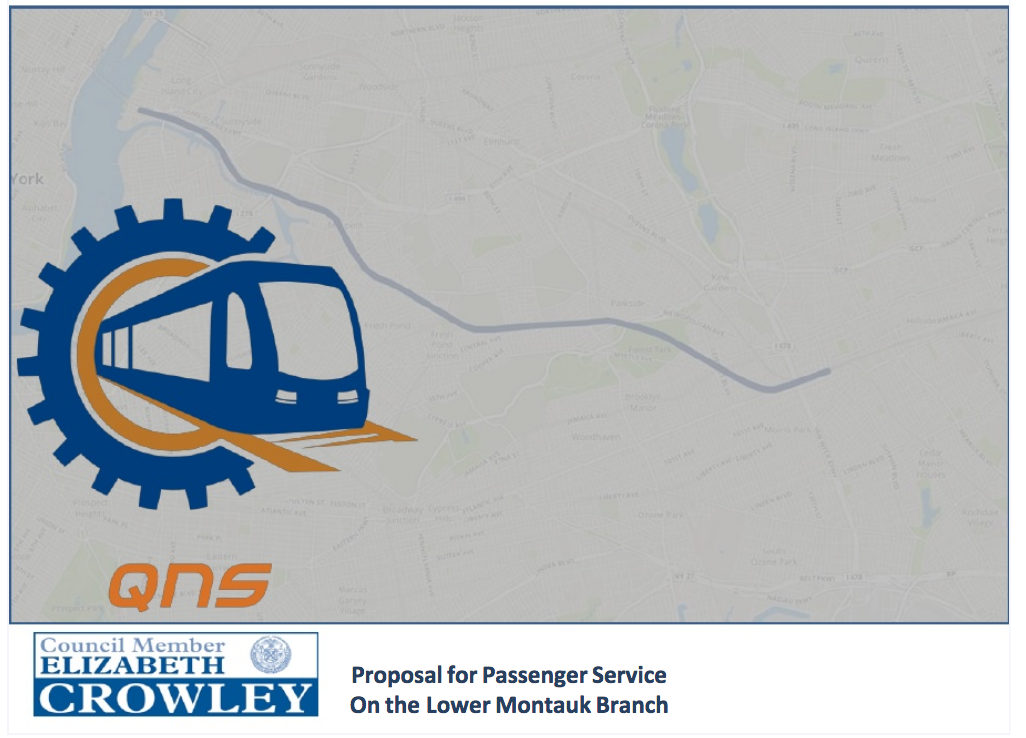
    This past weekend, the NYC DOT (very) quietly released their study on creating a new rail transit route through Queens. Let’s take a look at this seemingly futile piece of research into a transit project that won’t exist anytime soon.
    (more…)

  • “QNS” Lower Montauk transit plan remains vague and deceptive two years later.

    “QNS” Lower Montauk transit plan remains vague and deceptive two years later.


    I really want to be explicit about this: I am one of the biggest transit advocates you’ll ever meet. Strong transit options are what made NYC a great city, and could be leveraged further to make it one of the most ecologically sustainable cities on the planet. Unfortunately our subway and rail systems have not grown to meet demand, and the costs of new route construction are off the charts, bat-shit insane. The MTA is a mismanaged bureaucratic mess currently being used as a pawn in some schoolyard slapfest between our current mayor (DeBlasio) and Governor (Cuomo).

    The need for new transit options is huge. However, I am often extremely disappointed by what passes for transit planning and advocacy these days. Many of the plans being pushed by our elected officials are devoid of facts, or purposely misrepresented with outright lies. These plans are too often not based on actual commuter needs, and are instead only take the considerations of the real estate industry to account. It is easy to see why our politicians are so concerned with pleasing the real estate industry, since many of them are financial supported by deep pocket real estate ‘developers’.

    The “QNS” plan, 2017 edition.
    This time two years ago, Ray Cevoli penned a scathing rebuke of Elizabeth Crowley’s initial Lower Montauk transit plan. We had hoped, by simply pointing out many facts, that attention would be paid to actual reality (vs. a vague pie in the sky idea). Looking through the latest presentation on this route, I can see nothing has changed at all. We are two years into talking about this project and no closer to it ever happening in any form.

    To fully illustrate my point, we’re going to go slide by slide through her presentation, pointing out lies and reading between the lines. This isn’t going to be pretty. Again: I want our city to do better and build more transit routes. But we can’t get there without honesty. Period. We can’t get there by ignoring reality and cherry picking facts. Should we add some form of passenger trains to the Lower Montauk? Absolutely. Should we also plan further into the future, and have a serious talk about the logistics of how goods get transported around Queens, Brooklyn and Long Island? Should we talk about preserving working class jobs, lower wage jobs that are often a stepping stone for those who cannot afford college to earn an income and progress forward in life? Definitely. Should we also talk about actual cost, and how to keep a project like this from blowing through billions of dollars in taxpayer money? Yes. Unfortunately, we’re two years in and many of this discussions haven’t even been brought up. We need to change that. This is serious. If a project like this is handled wrong, it is going to have serious negative consequences for Queens, Brooklyn, and Long Island.

    Into the slides:

    So right from the start, if you throw out the list of ill-informed supporters at the end, we have 14 slides. As we will see, half of these slides are geared towards real estate developers, and there are no slides at all talking directly about who and how many people would ride it. As we progress through this presentation, you too might become infuriated at this complete lack of keeping actual people in mind.

    Also, in this slide there seems to be a big lack of decision making in regard to using em dashes, plain dashes, and spaces. Who proofread this thing? Certainly not Kevin Walsh.


    To illustrate my points, I’ve circled key areas of the presentation in red. Here we see that AECOM is being paid half a million taxpayer dollars to create a study on project. I’m a little confused here. Isn’t this a plan from Crowley’s office? Does she not have staff to do some of this research work? Is she herself adverse to work? I sure hope AECOM’s study considers all the facts, because that’s a lot of money. I could do the job for half the cost in a year.


    Moving to the next slide, reality comes at you fast. This is a huge set of broad statements that need to be unpacked and checked.

    For the first circle, there is currently no connection from the Lower Montauk to the AirTrain. The AirTrain was designed as a stand-alone system, requiring third rail power. The Lower Montauk has never had third rail installed. Want to connect the two? Great! It will cost you well into the hundreds of millions of dollars to do so. All of that new third rail, signal systems, viaduct connects at Jamaica would cost a lot of money.

    The next statement I’ve circled is somewhat false, and akin to comparing apples and oranges. An express train on the LIRR mainline can top out at around 80mph. Sure, that’s 20mph faster than AirTrain, but LIRR passenger trains on the Lower Montauk never ran more than 50mph. The geography of the Lower Montauk, along with the numerous street crossing, restricts it from ever being a high speed transit route. It’s also worth noting the LIRR mainline is 4 tracks wide. The Lower Montauk is 2 tracks, with a single track east of Blissville.

    The last statement on the slide is a complete lie

    The last statement on the slide is a complete lie: existing air train rail cars can’t use the Lower Montauk line. Again, there is no third rail. Installing one, with a modern signal system, would be a billion dollar project. There’s also the little matter of FRA and ADA regulations, which are being ignored. All of those AirTrain cars would likely have to be replaced. Anyone who knows anything about rail operations knows this. This is not an oversight on Team Crowley’s behalf. They have been working on this for two years now. This statement is a lie. A purposely stated lie.

    I’m not sorry to say this: lying to the public is not kosher. It is willful deceit with the intention of achieving a hidden agenda goal. And it is being presented right here, just one slide into this presentation. Once you open the door to lies, it throws every single other piece of information in this presentation into question. Now every line must be analyzed to verify if it is factual or fake news.

    Again: we’re talking about an NYC transit project. Everyone knows we need more transit options. There is zero need at all for any lies.


    Let me be clear: If Crowley didn’t open the door by lying in the previous slide, and in many of her statements on this project, there would be no reason for anyone to ask what this is really about. Instead of a positive discussion on expanding transit, we’ve gone off the rails – entirely due to lies.

    With this slide, you’ll notice the first statement I’ve circled is a questionable attack on the freight railroad that currently operates on these tracks. NY&A safety record is inferior to whose? What factual comparison against other railroads is this statement based upon?

    Let’s back up a second: NY&A has had a few safety issues in years past. Their record, so far as I know, has drastically improved as of late. Also, the NY&A is contracted by the LIRR/MTA to operate their freight trains. That contract was up for renewal this year. The LIRR/MTA clearly doesn’t believe that NY&A has a very bad safety record, as they literally just renewed their agreement for ten more years.

    Furthermore, the LIRR arguably had an even worse safety record on these tracks. Going back to the 1970s, Penn Central’s safety standards sucked bad enough that they accidentally killed an employee on their tracks nearby. Rail safety has gotten far better over the decades. For context, we’re talking about a freight railroad – which moves around tons of cargo and includes jobs that are very manual and dangerous in nature, nearly all of it performed outdoors, exposed to the harsh elements. This is not a cozy desk job where the biggest danger is a paper cut. It’s not like being a politician, where you’re driven to city hall in an SUV.

    This second circle though really blows my mind. WHAT ON EARTH IS SHE TALKING ABOUT?

    Is Liz Crowley advocating that the MTA should rip out the Lower Montauk tracks and make it into an 8.5 mile long parking lot?

    Is Liz Crowley advocating that the MTA should rip out the Lower Montauk tracks and make it into an 8.5 mile long parking lot?

    And let’s back up even further here: NY&A has paid the MTA $635,000 so far? Think about that. This is a revenue stream for the MTA. Last I checked, the MTA needs every penny it can get. If business continues to thrive for NY&A (which it is), the MTA will earn more money – at no cost. Strong rail freight infrastructure results in lower prices on consumer through cheaper delivery costs. This is no small matter. This would directly affect the overall cost of living in NYC and result in a huge new burden of truck traffic throughout Brooklyn, Queens and Long Island.

    Getting back to the parking thing: I can’t imagine a worse point to make here. We’re supposed to be talking about a transit project with the hope of maybe getting more cars off the road. Instead we’re now talking about creating a huge parking lot to fill the streets with more cars, because that would make the MTA more money than they current get from NY&A?! We’re talking about ripping out freight tracks which will result in hundreds more trucks on the streets and highways of Queens, Brooklyn and Long Island. What. The. Fuck. She is literally advocating we destroy an absolutely priceless piece of NYC infrastructure so the MTA can make more money.

    It is sad that this person is about to be re-elected to her city council seat (and still sadder that no one truly respectable opposed her). With a hidden desire to destroy infrastructure for profit, she’d be better suited working for Trump.

    Again: I did not open the door to this conversation. Never in my wildest fever nightmares have I ever imagined that an elected ‘democrat’ in the city of New York would ever be so foolish to make such a suggestion. I literally cannot believe I have to highlight this. I am not the problem.


    My god we’re only to slide 6.

    I found this slide interesting – disinvestment? We’re now going down the rabbit hole of evil real estate developers, who make it sound like older houses and buildings automatically means low value, bad for the economy, perhaps even blighted? Look at this map, and then go walk around these neighborhoods. In the residential areas you’ll find homeowners who care about their neighborhoods, maintain and improve upon their homes, and who like their neighborhoods just they way they are.

    We’re now going down the rabbit hole of evil real estate developers

    The only purpose for this slide is to target real estate developer, showing them a part of the city that hasn’t see the skyrocketing rents we see in places like Astoria, LIC and Greenpoint.

    Also, it is worth nothing that this route was proposed as a subway route back in the 1970s, and local residents protested that plan completely, on dubious, allegedly race-based grounds. The lack of passenger trains on this route is grounded in that history. It is grounded in the fact that the MTA refused to build stations here in the 1990s, forcing them to stop running the few passenger train they bothered to run here at the time.


    As someone who works in tech, this slide confuses me. I mean, clearly the intent here is to try to persuade real estate developers and tech companies that this is a great area to build… ? Apps? Websites? I do that from my home office. What the hell do I need to go to Maspeth for? (No disrespect Maspeth, Iavarone is awesome)

    What is much more disturbing here is the fact that all of the warehouse and industrial space around the Lower Montauk are currently occupied. In Maspeth alone, we’ve got a huge UPS facility (essential for your mail delivery needs), a Restaurant Depot, numerous food and beverage distributors, a box factory, waste transfer facilities, a building supply transload and a massive aggregates transload – bringing in vital construction supplies to the city. All of these businesses (some of them relatively small businesses) employ thousands of people. The Lower Montauk is already rich with middle class jobs. Heck, even the railroad that serves many of them is a relatively small business compared to the larger railroads. What I’m seeing with this slide is a desire to push these businesses out of the area, destroy decent working class jobs, and to replace them with a tech sector. Reminder: most people in the tech sector have likely never even heard of Maspeth. I see no evidence that any tech companies want to move here.

    It’s worth referring back to Ray’s article, where Liz is quoted as saying “there is a lot of underutilized manufacturing which is also threatening us. “. Again: none of this property is ‘underutilized”. Blue collar jobs are needed to maintain a large city. We need to work to preserve the few industrial zones we have left in NYC. #SaveIndustrialNYC. We need to work towards preserving and developing jobs for those who can’t immediately afford college educations. A poor kid just out of High School is not likely to get a job in the NYC tech sector. Many have to work their way through college and struggle hard for years to achieve a desirable job with a living wage. I know this story firsthand from friends and family who have worked these jobs as a path to get ahead. I am reminded of this every day at one of my jobs, where I teach new techies. Even students with 4 year degrees can struggle in the tech field. And as a New York City public High School graduate, I can very much assure you that the chances of any 18 year old finding a great paying tech job are really, really limited.


    I guess this slide tries to answer my previous questions. 3D printing is something I could do at home. You don’t need a huge factory to do 3D printing. Metal & Wood fabrication, and the film industry, are all already located along the Lower Montauk route. These are actually the businesses that would be displaced and forced out of the city if Blissville and Maspeth suddenly becomes home to tech jobs.

    As for Craft Beer… I doubt a brewery on Rust street would get enough foot traffic to sustain business. Also there are a lot of people around there driving some very large trucks. Do we need a bar there? How about no?

    Why are we encouraging people to drink anyway?

    Oh, I get it. You have to be drunk to really get through this presentation. Pour me a shot of Tullamore Dew.

    Oh. This slide. Uh, ok? You can clearly see where the more populated areas of Queens are here, along with commercial strips like Queens Blvd. You can also see there are plenty of decent blue collar jobs already along the Lower Montauk route. So what is the point of this slide? Are we trying to create more low paying retail jobs now? Ya’all heard of this thing called Amazon right? They ship stuff right to your door, sometimes via UPS, passing through that big old warehouse on Rust street. What does this have to do with a new transit route again?


    This slide is pretty gross. What I’m reading between the lines here is: “all these real estate developers want to make more money off their property and are willing to throw a few nickels from their billion dollar war chests at it by providing a small strip of land for a station”. Those stations of course would increase the value of their property hugely, so really – this is not charity on their behalf.

    All these real estate developers want to make more money

    Since we are again talking about real estate instead of actual commuter needs, this slide opens the door to comparing QNS to BQX. BQX is clearly a project driven by the real state industry. I’m still waiting for some slides on projected ridership, how riders will get from LIC across to work island (via a transfer at Vernon-Jackson to the 7 train? BWHAHAHAHA!).

    A footnote here: if you mention the “G” word to transit advocates, they get really bent out of shape. Personally I think it’s lazy to argue against a transit project on the grounds of ‘gentrification’. I wouldn’t even mention this G word if literally this whole (*&(*&^ presentation wasn’t geared towards real estate development. I’m not going to pound on this drum though. As you’ve seen, I have a dozen other red and yellow flags to throw. I’m sticking to those. Don’t be surprised if someone else throws this G flag though – and when they do, the only person to blame here is Team Liz Crowley for opening this door by putting out a presentation that is all about real estate development and not about actual commuters.


    Again, with the real estate, the breweries, the tech… Who else is this presentation for? Tech bros? Where would the stations be? If I live in Bushwick, how far of a walk would it be? How frequent would trains run? Why are we a year into talking about this project and there are no answers to these basic questions?

    You me and every other commuter are just an afterthought – pawns in this game. It’s really sad. It’s disturbing. Again: I don’t want to write articles like this, but here we are. We, the people of NYC, are not even a serious consideration in this plan. We’re being played against each other.

    We need to do better. We need to demand better. Who is QNS going to serve? How many riders per day? How far will they have to walk to this train? Will existing bus routes connect to it? How will commuters get to Manahattan from the end of the line in LIC (where an entire new tunnel would be needed to get into Manhattan)?

    For the love of god: why are we not talking about actual commuter needs here?


    *Sigh*.

    Another slide, and more about real estate. She is advocating that the MTA should sell all the air rights over the Lower Montauk and make half a billion dollars. Would we deck over the whole route too? Can I get a super mega big gulp with that?

    And let’s not forget that “67%” stat in this slide. When you look at the previous slide on old housing and building stock, it’s easy to see she’s advocating older homes be bulldozed and replaced with bigger buildings, to create even more population density, which can all take this new train to LIC and transfer to the 7 train on the way to Work Island. Good luck with that.


    And now we get back to rail freight… and lies.

    First, there’s no connection between the L and the LIRR bushwick branch. They are located a block apart and have no physical connection. Also, the Bushwick Branch east of Morgan avenue is currently very well used by a freight terminal. Hell, the entire Bushwick branch has a few freight customers moving thousands of tons of freight – trash, building materials and even Beer. Do we want all those goods moving by truck through the community now?

    Let’s back that thing up further: The Bushwick Branch is NOT the Lower Montauk. What is this even doing in this presentation? The Bushwick Branch is a single track route entirely not suited to passenger trains.

    This is another lie.

    Let’s get to the second circle. This is a lie. There is zero chance you’ll ever get a passenger train running on any of these freight tracks in a year. It would also be a very indirect route, and, again, require a transfer in LIC to the 7 train. You know, the 7 train – that magic subway line that has tons of capacity! (I sure hope everyone can catch my sarcasm by now).

    The third circle is comical. The Rockaway Beach Branch has been closed since 1962 and is unlike to see another train for at least a decade. You can read more about that mess here.

    Oh and let’s not forget what’s missing from this map: the CSX tracks from Fresh Pond to the Bronx. I’m guessing they were excluded because CSX makes a huge amount of money off this route, which the MTA does not own. It would also open up conversations about the fact that freight trains to and from Long Island use the Lower Montauk tracks – shhhh! we can’t tell anyone that their shiny new train transit QNS thing wouldn’t be able to run at night, and will have daytime disruptions from freight trains. It’s our secret ok? Don’t tell anyone. Let them believe they’re going to get a 24/7/365 subway that runs every 5 minutes here.

    To get an idea how much freight CSX hauls to Long Island, here is a time lapse of a freight train coming through Queens heading to Fresh Pond (square in the middle of the Lower Montauk route). As you try to count how many cars it’s hauling, keep in mind that a single freight train car removes 4 tractor trailer trucks off our highways and streets.

    In case you’re wondering, I did count, and it’s over 100 freight cars. That’s 400 less trucks rolling through the streets of Brooklyn, Queens and Long Island. This is just one train. Thanks, CSX and NY&A. Imagine how many trucks we could get off our streets and highways if our elected officials actually supported rail freight movement (instead of attacking it, as Crowley has). Imagine how much less air pollution we’d have, and how many fewer people would die in truck related accidents? Everyone cries about traffic but no one is willing to do something about it. More rail freight is part of that answer. We have the rail capacity, we need to focus on using it even more than we already do.

    This isn’t about whether or not you like choo-choo trains. Quite literally, if you are against the movement of rail freight in NYC, you are on the side more pollution, and more death.


    This is slide is just a bad choice in maps and labeling. I’m guessing the intent here is to say you could get from say, Maspeth to Montauk… let me tell you though, as someone who lives in Queens with clients in Suffolk county. To get around Long Island, you need a car. I drive out there every time I go, because in many areas the train is nowhere near your destination. The buses are limited or don’t go anywhere near where you need to go, and there are no citibikes, and due to suburban sprawl, a bike is not an efficient way to get around the island. Long Island is not NYC. If you have to get around LI, you need a car.


    The facts in this slide are the only ones I don’t want to pick on. It’s true: we need more transit options in Queens. We need a lot more. Using the Lower Montauk could help. But – it’s not that easy. Ray went into detail on that. We really, really need to talk more about this need than all of the previous slides, which were all about tech bros and real estate developers needs. This should not be one of the final slides in this presentation. It should be first.


    This is a cute supporting slide to the one above. yes, we should do far more for transit in Queens. No one is arguing that. I, however, am arguing that we need to look at this idea in a very big picture sense. How would adding passenger train service to this route affect local businesses? How would it impact freight movements to and from Long Island. Where would stations be? How many commuters would take it? How would these commuters get from a dead end at LIC into Manhattan when the nearest subway route is already at capacity with no way of adding more capacity anytime ever? And how much is all of this going to cost? Previously, Crowley has called for this route to be a ‘light rail’ line. Now she seems to want it to be an extension of the Air Train. Next week? Who knows. All of these are billion dollar options.

    Conclusion: We Must Do Better, Cheaper, and Faster.
    The one option I haven’t seen Crowley mention is the simplest, smartest, cheapest option available: Start by funding an LIRR to diesel hauled shuttle train on these tracks. All they need are a few train cars (they can rent them from MARC again for all anyone cares), a few locomotives, and an investment in a few stations with high level platforms. We’re talking about concrete here, 2-4 cars in length each. This shouldn’t cost more than $50 million. You don’t need a billion dolllars in new third rail and associated electrical grid upgrades.

    Start by funding an LIRR to diesel hauled shuttle train on these tracks.

    Let’s start a shuttle train. Let’s run it every half hour. Let’s see if there is actual demand for more passenger service here – and if there is, let’s work in the details of building upon this system. Let’s see how we can dispatch passenger trains without going to war and trying to get rid of existing freight trains (which will never happen, by the way – there’s this thing called interstate commerce protection, look it up). Let’s see what on earth will happen when we dump a bunch of commuters in LIC. Will they try to cram on the 7 train (that’s going to be fun). Will they try to cram on the ferry? Will they start a swimming club? Maybe we can start CitiKayaktm?

    Since we’ve talked a bit about the tech sector here, maybe we should approach this project like we would in tech. When we’re launching a new tech product, we build the smallest cheapest possible solution in order to validate that there is a market for it. We call this an MVP: Minimum Viable Product. If the product (in this case, the train) fails (doesn’t attract enough riders), we didn’t lose much. If it succeeds, we will have real world data to work with. We’ll have an understanding of ridership patterns. We’ll learn and iterate forward to a transit solution that is both affordable, attainable and ideally, sustainable. If liz wants to play up the tech sector, let’s apply real world tech sector methodologies to this project. Going back to 2015, Ray wrote out an entire plan for new transit routes that could use the Lower Montauk and Rockaway Beach tracks. There’s little in it that I don’t agree with.

    As for all of this real estate developer pandering: enough. Seriously. Enough. Not everyone can live in NYC. Not every pre-war building needs to be bulldozed and replaced with a disgusting modern building 5 times it’s size. Not every rail line needs to be decked over. Not every ounce of vaporware ‘air rights’ needs to be developed. Not every blue collar job needs to be pushed out of NYC, further creating a playground only for those with very deep pockets. Let’s stop this pointless bullshit conversation in its tracks, and let’s start talking about the very simple problem statement we actually need to be solving: How might we move outer borough commuters to and from work, cheaply and effectively, while striking a balance with existing local economies and logistics infrastructure needs. This is the only thing we should be concerned with that this moment.

    I’ve already mentioned numerous times in this article that I believe some form of passenger trains should run on the Lower Montauk. I absolutely cannot endorse Crowley’s plan though, because it so filled with lies and focused on the needs of real estate developers verses the needs of actual commuters. I cannot support it because it attacks vital infrastructure (the movement of freight via rail), the loss of which will increase truck traffic through NYC, kill jobs and lead to significant new air pollution. I cannot support this plan, because everything I have read about this plan suggests it will cost into the billions of dollars – all the while, a significantly cheaper alternative exists. I also will never be able to support this plan until the riddle of “How do you get commuters from the end of the line in LIC over to Work Island” is realistically solved. New commuters here cannot fit onto the 7 train. There are not enough ferries, large enough ferries, or even a large enough ferry terminal, to accommodate this.

    I don’t take these words lightly. This is serious. Crowley started talking about this plan in 2015. So far, all we have is real estate developer pandering, money being thrown at studies, and no idea who and if anyone would ride this thing. Transit on the Lower Montauk shouldn’t be this hard and preposterous, but apparently for our politicians, it is. At the moment, this isn’t a transit plan, it’s a god damned money pit for hired consultants and a marketing scheme to attract even more nefarious real estate developers who do not have commuters or the communities best interests at heart. I’m not going to stand for it, and neither should you.

  • Disassembling Liz Crowley’s Dumb Light Rail on the Bushwick Branch Idea

    Disassembling Liz Crowley’s Dumb Light Rail on the Bushwick Branch Idea

    If there’s one thing I can’t get enough of, it’s stupid politicians with stupid ideas talking about things they clearly don’t know anything about.
    (more…)

  • A Better Plan for Queens Transit Needs

    A Better Plan for Queens Transit Needs

    In a separate post, I dissected Elizabeth Crowley’s ‘Light Rail to The Mall’ plan. Realizing this probably makes me look like a really mean spirited guy, allow me to put forth a far more superior plan.
    (more…)

  • Disassembling Crowley’s Light Rail to The Mall plan

    Disassembling Crowley’s Light Rail to The Mall plan

    The abandoned Maspeth LIRR “Station”.

    There have been some recent news stories about the NYC city council trying to plan some better transit options around NYC – one of those ideas is to revive passenger train service along the ‘Lower Montauk’ tracks through Queens.
    (more…)

  • The Triboro RX: An RX for disaster.

    The Triboro RX: An RX for disaster.

    Do you want to see the city spend 10s of millions of dollars condemning hundreds family homes? Would you like to see severe service disruptions to the N and Q lines in Queens, including a potential full closure (to last months, or years) of the entire route between Queensboro Plaza and Ditmars blvd? Do you want to pay more in taxes to have your household trash trucked out of NYC? Or perhaps even see the reopening of the Staten Island landfill? Do you want to pay more for everything from Chinese food to plywood at Home Depot, and even higher rents in new buildings?

    If the ‘Triboro RX’ subway line were to be built, all of the above would happen. This might sound like hyperbole, but when you take a serious look at the facts I’m going to lay out, you’ll see what I mean.
    (more…)