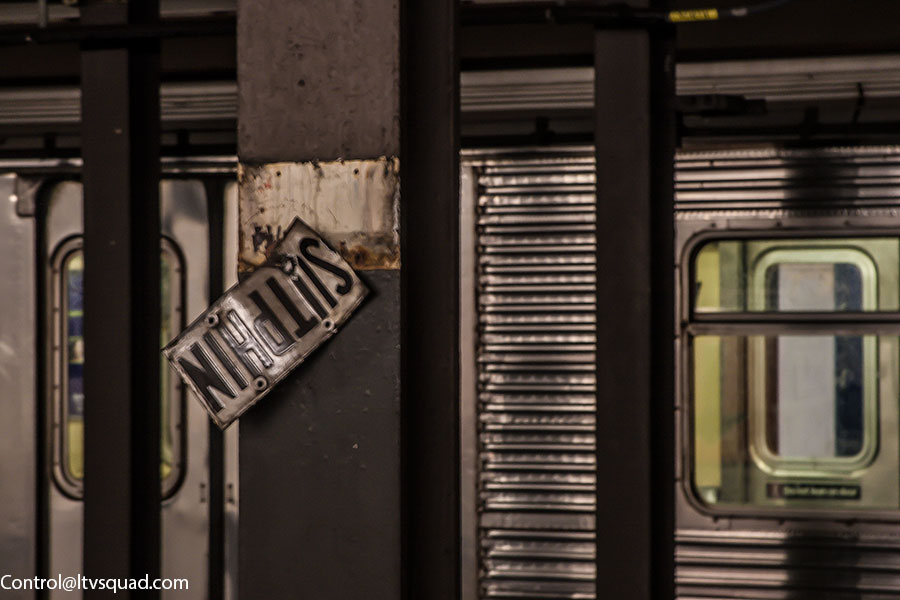
For decades now there has been a mystery surrounding the ’76th street’ subway station. Some old timers claim that they actually saw the station, while others refute it as absolute fiction.
The layup
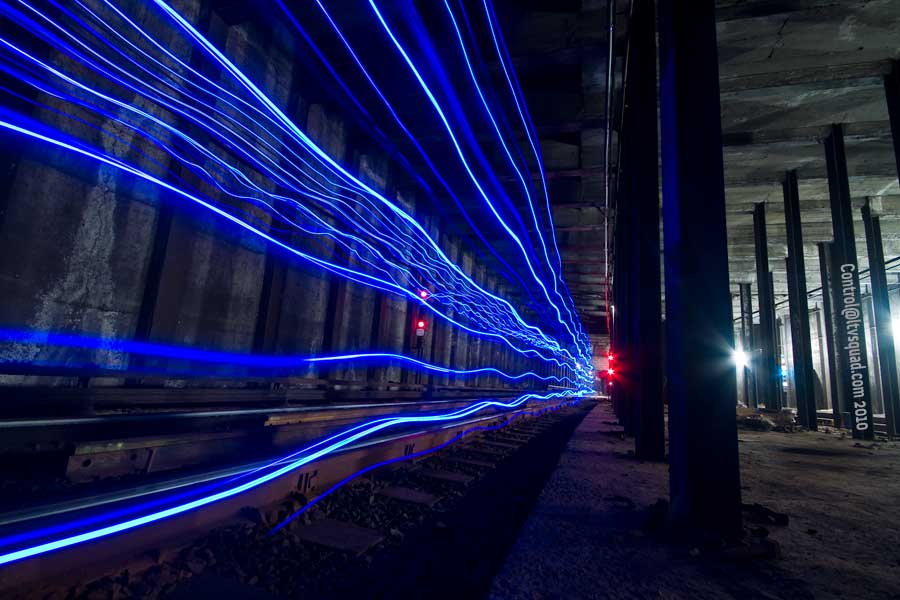
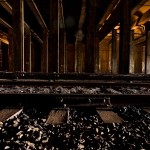
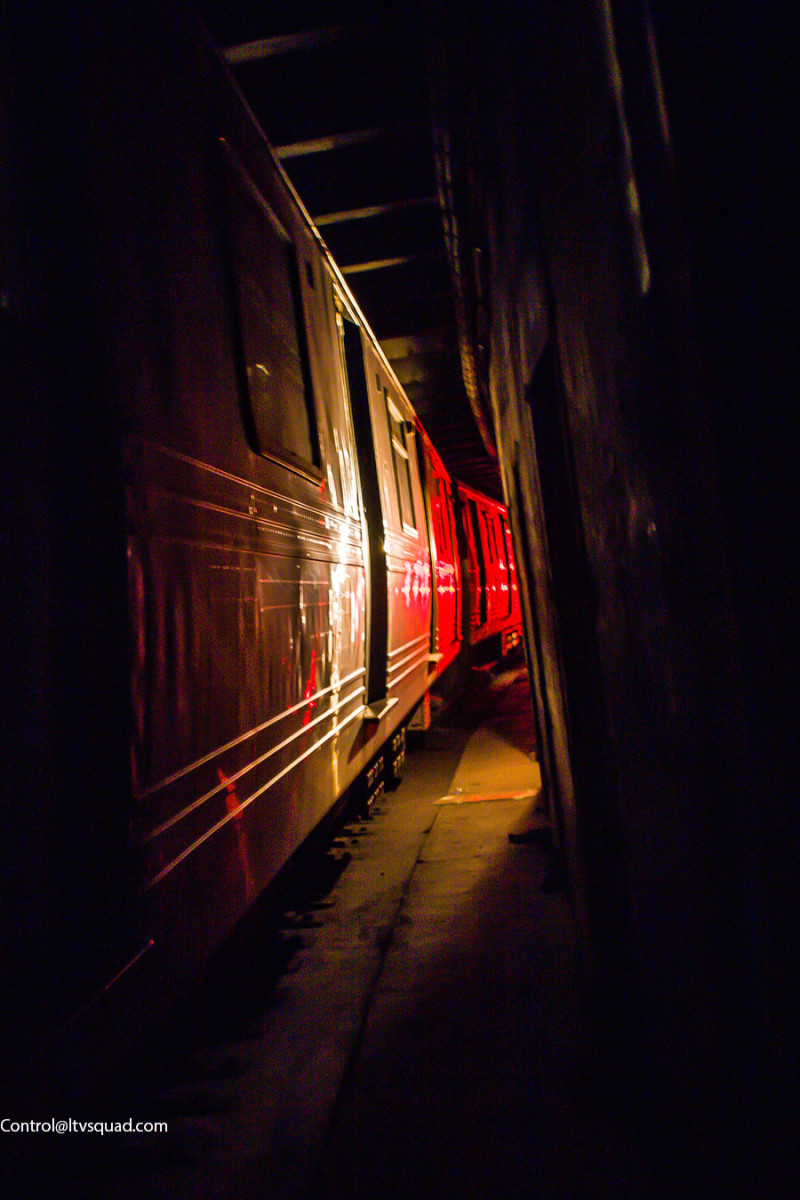
Between Euclid Ave and Grant ave on the A/C line, there is a set of ‘lay up tracks below the active A line. These tracks were built with the intention of building a new tunnel out to Cross Bay Blvd. The next stop past the solid concrete wall at the end was suppose to be 76th street.


There are several signals installed facing this wall – this one is just a few dozen feet from the wall – where a signal would make no sense to be installed unless there was track beyond the wall to fit an actual train.

Another one is a ‘homeball’ set facing the wall, just beyond which a set of switches was intended to be placed.
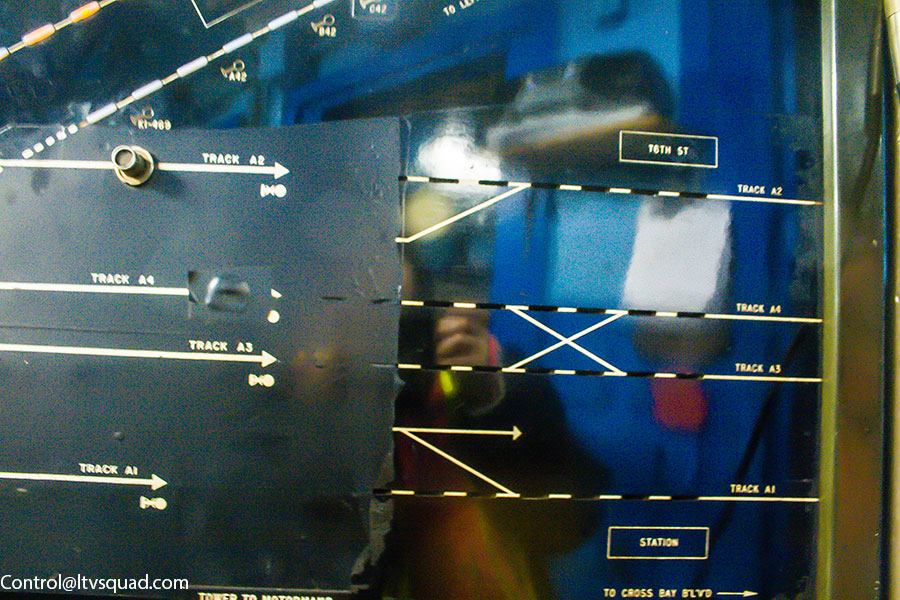
In a nearby tower, the board that shows the various tracks through the area explicitly shows a 76th street station.

Plans are clearly marked that the signals in question would be controlled by a future tower at 76th street.
Pitkin Yard
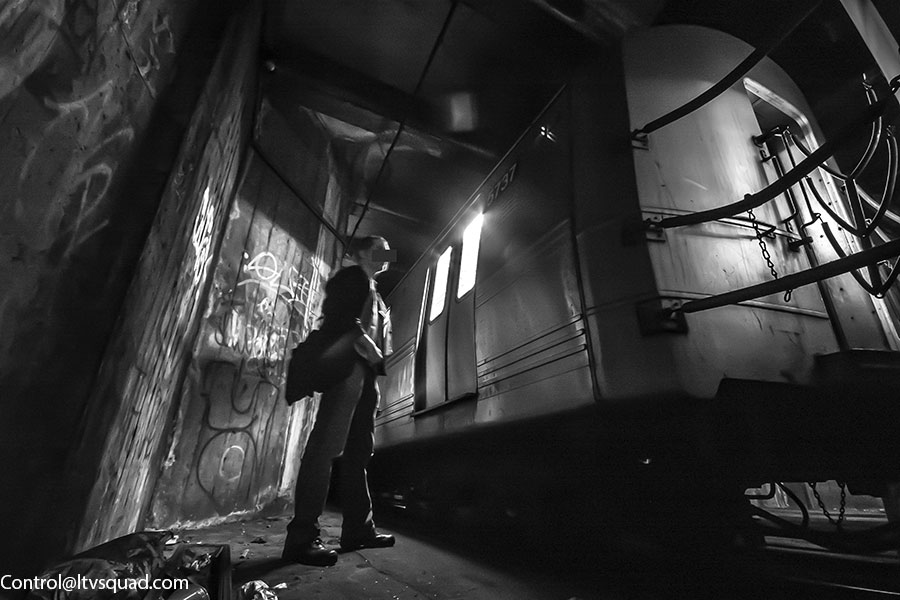
The Pitkin subway yard is connected to this tunnel, and if you go to the yard and into the tunnel, you’ll find a yard lead was built pointing out towards the east – to connect to the 76th street station and Cross bay blvd route.

Actual rail ties were installed at the switches.

Here, you’ll find more signals facing the wall.

The wall at the end is cinder block – and looks as if it were built as an afterthought – not an actual part of the concrete tunnel.

The bench wall here looks like it was chipped out after it was constructed.
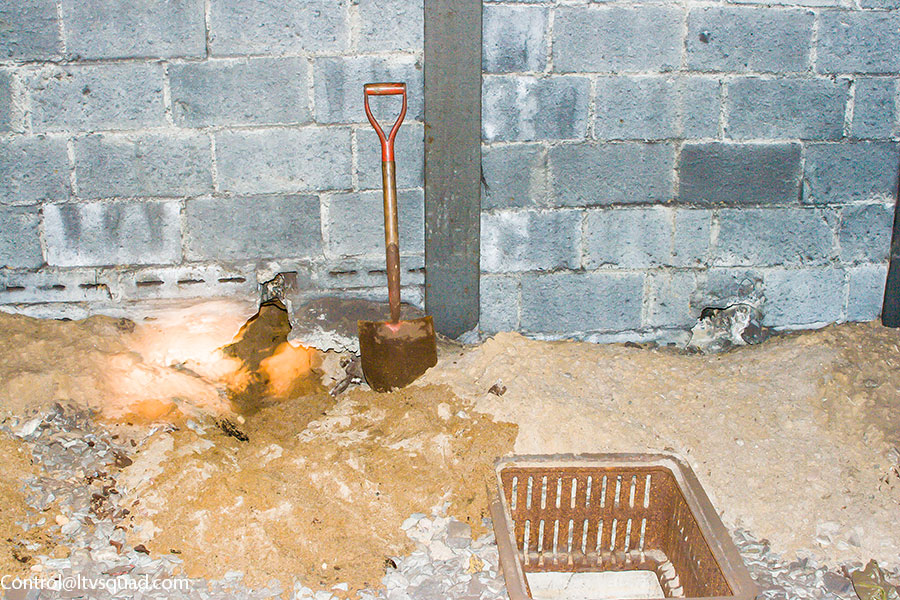
And still more mysterious, when you shovel dirt from under the wall, an almost endless supply of clean soil can be scooped out.
Conclusion
So what is behind these walls?
I have it on good authority that a few years ago, the MTA did some inspecting. When they drilled a hole in the concrete wall at the end of the layup, water began to trickle out. The test droll hole was quickly re-sealed.
As for the cinder block wall and soil, I can tell you several people have spent a few man-hours digging out sand and not getting through.
Was the whole tunnel filled in, or just a small section? How was this soil placed here? Was it always here in the ground, or was it purposely piled here? Wouldn’t the soil have been more gradually if they simply stopped the tunnel construction here, instead of a wall with soil packed in behind it?
Do I personally think there is a 76th station and/or more tunnel beyond the wall?
There’s just not enough evidence to say either way. The tunnel was definitely planned, the provisions for it were definitely built – right down to the signals – but what lays behind these walls – particularly the yard lead wall – are a mystery we would love to see solved.