I saw more of that nonsense in Metro today about banksy and said to myself, wow – since when is that newsworthy? And why no mention of OMAR?
I saw more of that nonsense in Metro today about banksy and said to myself, wow – since when is that newsworthy? And why no mention of OMAR?


What would an explorer’s post to a singles website read / look like. For extra added comedy value we went so far as to set up this fake profile on a singles site? For shits and giggles I made the above fake profile.
The theme of the post was to really piss off a large number of women you might find on a dating site. Have you ever read some their posts? Seriously for reals, surf around and you too will be disturbed by the vapid chicks who list ‘shopping’ as an interest or hobby, and who also think they’re too good to you know, do normal tasks like open their own doors, wash their own asses, etc. The above fake personal ad was directly inspired by such vapidness, and lasted about a week before being deleted.
Maybe some day I’ll post the message we received from some truly depraved women that believed it was a real ad. Maybe. Until then, if you’re utterly bored and looking for a cheap internet thrill, set up your own fake profile and link it in the comments here!

Yesterday’s fuss about the west side ‘Cow Tunnel’ really got me wondering if perhaps the ‘Luv Tunnel’ was known by another name decades ago. Afterall, They are located not far from each other and urban legends, particularly concerning the NYC underground, are often wildly exaggerated. Stories about hidden abandoned subway stations still with pianos in them, CHUDs, etc are sadly pervasive. Thus it’s not much of a stretch to assume that rumors of a possible tunnel built at 34th street could actually be an actual, existing tunnel at 41st.
Before we go further, if you haven’t already, check out the original post on this topic over at Edible Geography. It’s a most interesting read…
The Luv tunnel has always been a bit of a mystery to me. It’s a short tunnel that dead ends at a solid concrete wall. According to some older graffiti artists/explorers, this tunnel once dead ended at the Hudson river. I never got around to doing homework on it until now (10 years after discovery of it)
There are very few references to what function this tunnel previously held online. Approximately located below W41st street, ‘the luv tunnel’ served 2 functions:
1) As a wye (used to turn railroad cars and engines around – sort of like making a 3 point Uturn, only on tracks), and
2) To service stock yards previous located above these tracks.
My only current reference for this second part is this obscure web page – with the relevant quote: “At 41st Street there was a wye as well as a stub track to several slaughter houses”.
This is however backed up by the location of a stock yard and slaughter houses on this old 1920s map.

As you can see, there was a rail line (denoted by the solid line with the slashes through it) running up the south side of W41st street to service the stock yards (where one can assume cows were delivered for the slaughterhouses). When these tracks were later placed below grade, my theory is a basement level loading dock was built to connect to the tunnel. It’s not very far fetched when you consider how many businesses modified their buildings to receive rail service from the (then new) High Line.
Underground tunnel + Slaughterhouses = “Cow Tunnel” ?
If you have a better theory and more information, please step forward with it in the comments. I’ll gladly update this & give cred where it’s due.
Until then, enjoy these modern day photos of the Luv (maybe Cow) Tunnel.

Junction of the ‘Wye’.

One of 2 Wye tracks, facing south (and yes, it’s Utah’s world, we just visit it)

End of the line facing 12th ave. Miru Kim & Ben Gibberd are the mysterious characters in the background – we were down there for his excellent NY Times story.
(Hey since I’m so plug-happy today, how about that Utah plug one more time? Utah, Bitches!)
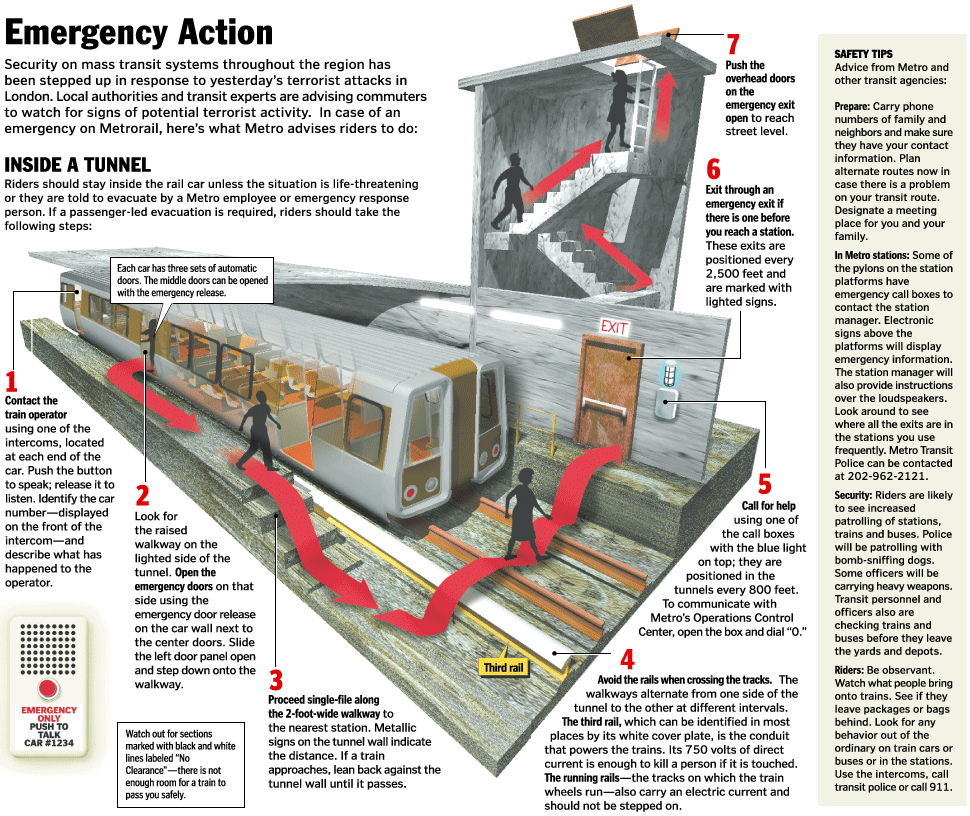
Hypothetical situation: You’re on the train going to work. There is a loud bang. The train stops in the middle of the tunnel. There are no announcements and there is suddenly smoke in the air. There’s no MTA personnel in sight, because they’ve been incapacitated. How do you escape?
Sadly, how to escape from a subway tunnel is information that few citzens in NYC know or understand. No one outside of MTA personnel and *maybe* first responders know the basics of safety within the tunnels of the subway system. With millions of riders a day, and the average real response time to any emergency 10-15 minutes (see this post for further info) – it’s imperative that anyone commuting via the NYC subway system understands how to survive and escape the tunnels. Subways are a prime terrorism target. Even before 9/11 we had our own wackos to deal with.
 (click for larger view)
Fortunately for us, Avid LTVer SR notes that the Washington DC subway system doesn’t have the same hang ups that the NYC MTA concerning providing its riders all the information they need to escape from a subway tunnel in cases of extreme emergency. This diagram to the left is most helpful – showing how to exit the train and make your way out of the nearest exit. Everything you see in this diagram can also be applied to the NYC subway system.
The most deadly things you’ll find in an NYC subway tunnel is the third rail and moving trains. Never walk on the tracks when it can be avoided – and expect a train to come in any direction on any track at any time. There is generally a ledge on the side of the tunnel that is a clear safe path for walking on. Find one of the many short ladders and climb onto it.
To do this you might have to step over a third rail. The third rail is the large honking one right next to the 2 tracks you’d expect to see. The powered portion of the rail is on the bottom – the top is a safety cover. Step wide over the entire rail.
You will have to find the nearest exit. Often the closest exit to the street is the nearest station. Stations are easy to find, as they are very brightly lit. Emergency exits are generally located halfway between each station (though there are tunnels without ‘EE’s or ‘hatches’ as we call them – hell, there’s an entire flickr group dedicated to being down the hatch).
Emergency Exits are generally found along the bench wall and are marked with yellow paint and a red ‘Emergency Exit’ sign. Take a mental note of any number on the bottom of this sign.

Once you arrive at the exit, follow the signs up the stairs until you come to a set of steps that dead end at an iron plate. You are just below the sidewalk now. In the middle of this place there will be an iron bar going across it. Push hard on the bar and it will swing open.

These exits are very rarely used, so it may be hard to get it to pop open. You may need two people pushing the bar or to squeeze under it with your back to the bar and push up with your legs. Once the hatch is open a little it will swing the rest of the way, as it does contain counterweights which will help it open once set into motion. Exiting the hatch will place you on the sidewalk, usually near an intersection. In an actual emergency involving other passengers it’d be wise to dial 911 to direct responders to this intersection so they can aid anyone having trouble navigating the tunnels/stairs/ladders up to the street.
All exits are alarmed with a silent trigger on the hatch as well as motion sensors which will set off some bells and whistles down at MTA headquarters – don’t rely on that though to get their attention – once you’re on the surface, make that 911 call. If you don’t know / can’t find the street name and number you’re now on, tell the operating the number of the emergency exit you just came out of – as the MTA will know where those are and we can only hope that local first responders also know (and if they don’t, at least they can be directed there by someone at the MTA, one should hope). If all else fails, block traffic, yell, ring doorbells, etc – cause a scene. You never know who’s around that could be very helpful in getting people out. During those first few moments after an incident occurs, chances are very likely you’ll have to rely on your own wits and those of others around you to get out and help others out where you can.
So that’s it for lesson one in tunnel survival. We’ll get more in depth on certain aspects of this later on. For now though it is really imperative for your own safety to understand these basics. Feel free to post questions under the comments, and we’ll address those next time.

Epic Photoshop work by Sir McVeigh Lance
There is no hope for the G train. NYC’s lonely ‘crosstown local’ has been the subject of MTA neglect for decades. Originally planned as a feeder connecting various large trunk lines heading into Manhattan, 2 of which were never built (despite provisions for them having been constructed) – The G gets no respect. There’s an entire blog dedicated to trying to save it. Well I for one give up. To Hell with the G!
The G is *supposed* to run from Church Ave in Brooklyn to 71st Ave in Queens. This never happens. The train routinely terminates at Courthouse Square. Why it still appears on any MTA schedules as running through Queens is beyond me.
It is also *supposed* to run every 6-8 minutes during rush hour. This NEVER happens, either. In reality it runs every 24 minutes, with a train running 6 minutes behind that one to maybe clear up the huge crowd that couldn’t fit in the first train.
It is also the only non-shuttle subway line to run in NYC with just 4 cars. 3, assuming one of the now ancient R46 cars has a problem causing it to be locked up and out of service. The excuse was always that there were never enough subway cars to run full length trains on this line – yet in the last few years the MTA has sank hundreds of subway cars to the bottom of the ocean for artificial reefs instead of – you know, maybe fixing a few up to run normal length trains on the G. The present day operation of 4 cars trains are often not enough to contain all the passengers who kid themselves into thinking that they might actually get to work on time trying to utilize this twisted joke of a train.
It’s time to put the joke to an end.
As everyone knows, The G has been shut down the last few weekends. I wouldn’t be surprised if this is an MTA experiment to see if they can get away with shutting the entire line down permanently.
Then the MTA can wash its hands of ever having to maintain what is left of the G line’s stations and tunnels – both of which are crumbling. They could rip out the tracks and signals – creating a huge inventory of both for their other subway lines – and hand over ownership to the NYC DOT – where I can assure you Commissioner Khan is already wetting herself at the prospect of converting the length of the line into one huge bicycle highway.
Think about it – Instead of actual service improvements to make the G a line worth commuting on, they have instead given Brooklyn nothing but bike lanes. Who needs to spend money running a decent subway line when you can shut the whole thing down (or have it perform so shoddily that it may as well not run at all) and instead throw up a few bike lanes?
It’s high time for the MTA and NYC Government to either pull the plug already or invest some real cash and create reliable service on this subway line.
2016 Update: Since this sarcastic piece was written, G trains have been slightly lengthened, and the route has been modified to permanently end at Court Square (removing it from the queens blvd route), and lengthened to Church Ave in Brooklyn. Real Estate developers are now clamoring for the “BQX” streetcar, which will more or less mirror the G train route. Only it will be placed along the shore, and on the surface streets, where it will crawl even slower than the often shoddy G train. One must wonder though – will BQX be made to replace the G so the MTA can abandon this route that they have neglected for decades?
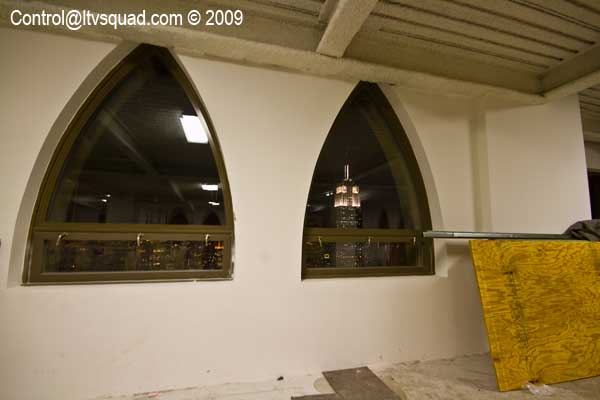





(well, it’s either that or I’m foreshadowing another post again)
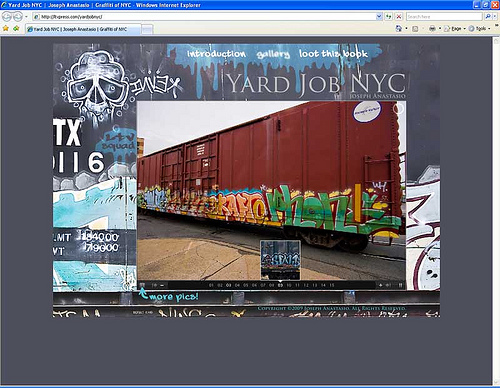
As you may or may not know, We here at LTV have our own publishing wing cranking out the occasional underground completely DIY publications. We don’t do it so much for the profit as for the desire to document various exploring related aspects of NYC life in print form for generations to come. That said – here’s some 411 on our latest: Yard Job NYC

NYC: It’s where modern day graffiti went from chicken scratch to full blown art form during the most improbable of times.
Rail Yards: Much like the subway yards before them, the freight yards of NYC have become a proving ground for a new generation of writers.
Yard Job NYC is the only book that documents this relatively obscure through thriving graffiti scene. nowhere else will you find old school cats like Chino, Wolf, Smith, Trap, and Zephyr crushing cars illegally, along side newer writers – Noxer, Staer, Celf, Muk… Completely devoid of gay-ass hipster ‘street art’, graffiti exists on these rails in its purest form.
Documented over many months of persistent photographing, Yard Job NYC carpet bombs and crushes the myths, exposes the facts, and brings the fresh on. can you dig it motherfucker?
Loads of sample photos and fodder that didn’t make it into the print book can be found on the Yard Job NYC website, as well as in the LTV Photoscream… I mean Stream… Raaaahhh!!!!
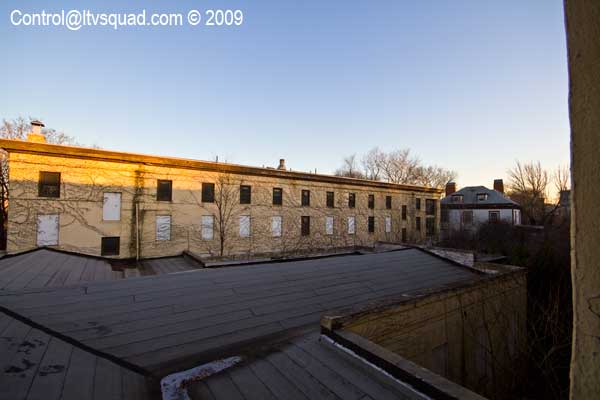
The Brooklyn Navy Yard Nurses Quarters (Building RG) is one of the most overlooked abandoned buildings in NYC.
(more…)
The Lower East Side seems to be home to many subway tunnel cats. The latest one to make the news is the one residing at East Broadway on the F line.
I haven’t been by E. Bway myself to track down this cat but I’d assume he’s living in the large abandoned mezzanine within the station. Some commentors on Gothamist seem to think the cat is in danger from the ‘huge rats’ in the subway. Subway rats are really not that big and certainly no match for a hungry feral cat.
Our NYCX connect, the man from down under, Sean Vegezzi, Coaxed this photo out of the ever elusive Canal Street cat a few years back: