
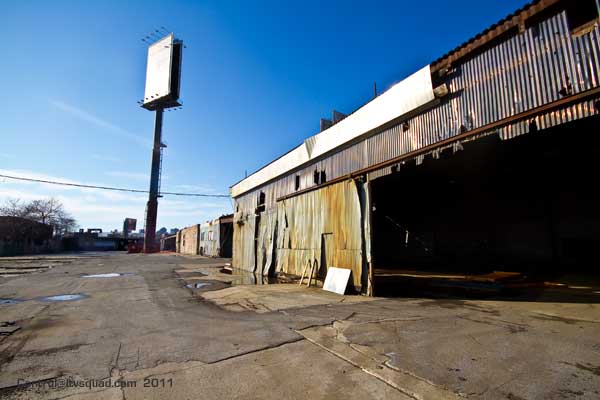
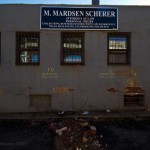
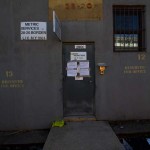
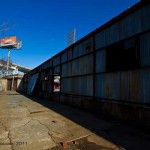
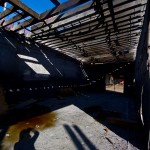
Long Island City has been in a constant state of change in recent years. Old factories have been torn down at a disturbing pace. The former Seaporcel Metals building was just another victim of this rampant overdevelopment.
History
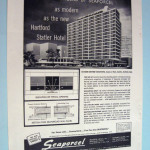
This building and lot was once the home of Seaporcel, a metal manufacture who’s work seemed to focus on exterior, ornamental steel. The company seemed to be in operation from the 1950s and into the 1960s. They held at least one patent, for ‘translucent building panels‘. These panels were used in ‘modern’ buildings, such as the Hartford Statler Hotel, in Connecticut. There’s a few photos of this building (aside from the one in the advertisement in the gallery with this write up) online – this being one of them. Apparently this building was later ‘modernized’ (and made very ugly) and then bulldozed in 1990.
Around 1960 the company was also having some internal management issues, which lead to at least one lawsuit. Curiously, the plantiff in the case also seemed to own another steel company in Brooklyn according to this SEC filing. I’m sure there’s some interesting stories behind these characters (if anyone wants to dig, by all means let me know what you find).
It just goes to show that not all industries started in L.I.C. survived or made a huge impact in society. Eagle electric, swingline staplers, there were many examples of big businesses born and raised in LIC. Some, like Seaporcel, didn’t grow, and soon disappeared.
It just goes to show that not all industries started in L.I.C. survived or made a huge impact in society. Eagle electric, swingline staplers, there were many examples of big businesses born and raised in LIC. Some, like Seaporcel, didn’t grow, and soon disappeared.
More recently, the building had a few tenants – a lawyers office and Spring Scaffold – one of the largest scaffold companies in NYC. all of these tenants were given the boot when Fed Ex decided to build a huge new distribution center across the street on the old National Envelop property.
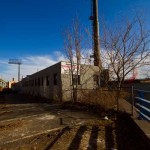
The building here was quickly bulldozed, and the property is now a parking lot.
Getting IN
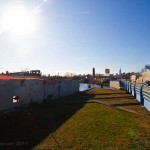
Getting in here was rather easy, though slightly bold. Part of the lot comes up against a space where the Borden Avenue Drawbridge slides into open position ( it is one of 4 ‘slider’ drawbridges in the USA – moving horizontally to allow boats to pass in the creek). There is a ladder down into this spot off the bridge, and randomly enough there was a nice sized hole made in the building wall that proved easy to climb into, even in broad daylight.
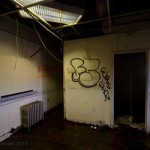
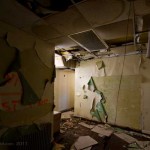
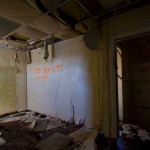
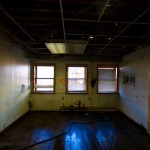
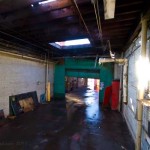
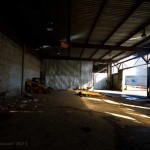
Once inside, the lot was largely already cleaned out. The building was a half moldy, half intact juxtaposition of decay and disorder. There really wasn’t much to see.
We came back one night and used this spot as a springboard into exploring the old texaco oil facility next door. Currently that property is a truck parking lot. There’s only a few small buildings here, most of them sealed up pretty good. In the near silence we heard some security guy wandering around – he seemed to be either trying to find us or talking to himself. Not sure what we were dealing with, we figured maybe this spot-next-door would be best revisited. Any night seeing even a small lot, no matter how seemingly boring, that soon became history was already a mission worth taking.


Leave a Reply to Glenn Sildar Cancel reply